Views: 0 Author: Site Editor Publish Time: 2026-10-21 Origin: Site
Choosing between a thermoplastic and rubber hydraulic hose depends on your system's pressure, temperature, fluid compatibility, installation space, and operating environment. Both hose types can serve demanding hydraulic applications, but their materials and construction affect performance.
Thermoplastic hoses often use synthetic polymer tubes and covers with textile reinforcement. Rubber hydraulic hoses use rubber compounds and may include textile or steel wire reinforcement. Neither material is best for every application.
This guide compares thermoplastic vs rubber hydraulic hose construction, performance, applications, maintenance, and selection criteria to help you make an informed choice.
Table of Contents
The main difference between thermoplastic and rubber hydraulic hoses is the material used for the tube and cover. Reinforcement also plays an important role in pressure capacity and flexibility.
Thermoplastic hydraulic hoses use synthetic polymers such as polyamide (nylon) or other suitable thermoplastic materials. Depending on the product, the hose may use synthetic fiber reinforcement and a thermoplastic or polyurethane cover.
A typical construction includes:
Inner tube: A polymer selected for the intended hydraulic fluid.
Reinforcement: One or more layers of high-strength synthetic fiber.
Outer cover: A material designed to meet the required abrasion and environmental resistance.
For example, Grantseed Rubber's SAE 100R7 thermoplastic hydraulic hose uses a polyamide inner tube, synthetic fiber reinforcement, and a polyurethane cover.
This construction can provide a lightweight hose for suitable medium-pressure hydraulic applications. Actual pressure, temperature, and fluid compatibility depend on the specific model.
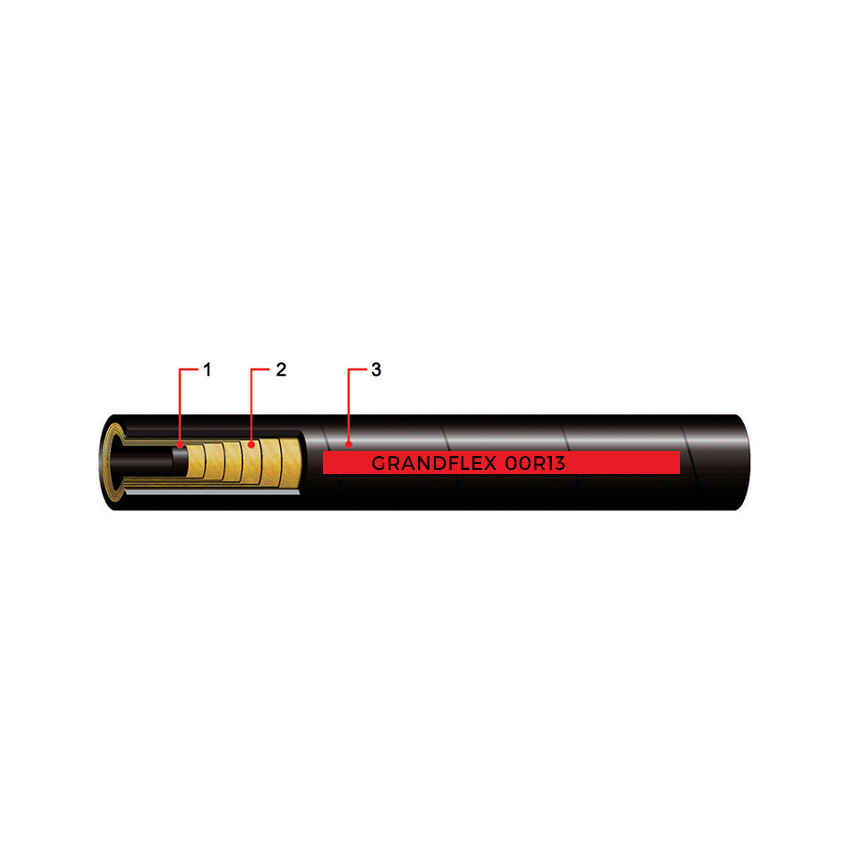
Rubber hydraulic hoses use synthetic rubber compounds selected for their intended service conditions. The inner tube, reinforcement, and outer cover work together to contain hydraulic fluid and withstand operating loads.
A typical construction includes:
Inner tube: A rubber compound selected for fluid and temperature compatibility.
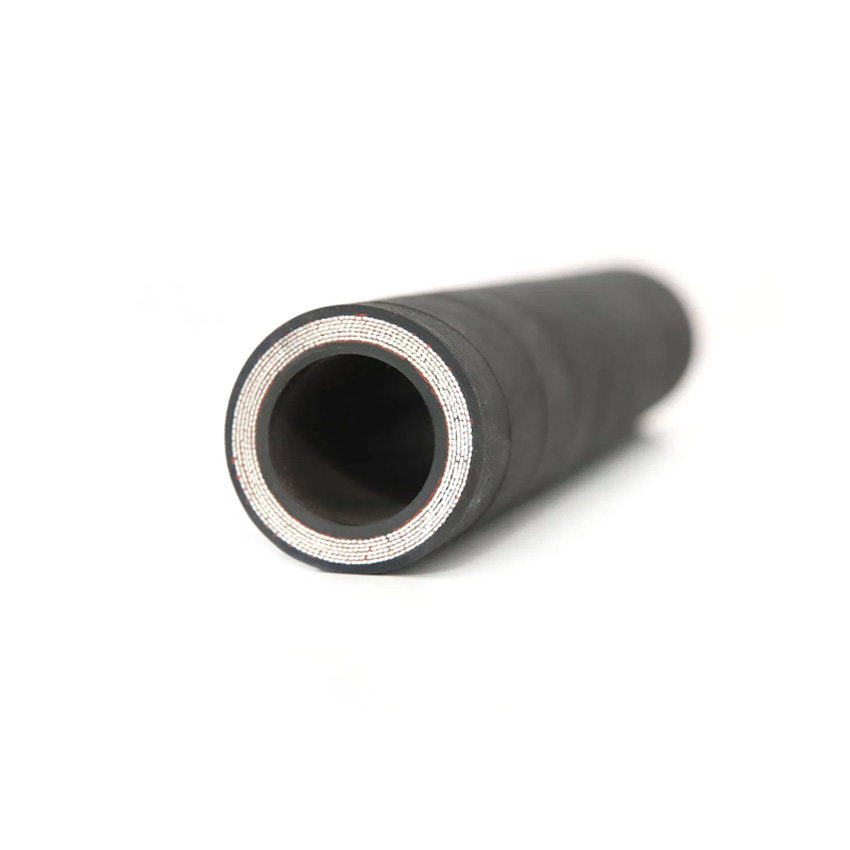
Reinforcement: Textile braid, steel wire braid, steel wire spirals, or another specified design.
Outer cover: Rubber formulated to provide the required resistance to abrasion, weather, ozone, or other environmental factors.
For example, the SAE 100R13 rubber hydraulic hose uses an oil-resistant synthetic nitrile rubber inner tube, steel wire spiral reinforcement, and a synthetic rubber outer cover.
Feature | Thermoplastic Hydraulic Hose | Rubber Hydraulic Hose |
|---|---|---|
Tube material | Polyamide or another suitable polymer | A specified synthetic rubber compound |
Reinforcement | Often synthetic fiber | Textile, steel wire, or another specified reinforcement |
Outer cover | Thermoplastic or polyurethane, depending on design | A specified rubber compound |
Weight and flexibility | Often lightweight; depends on construction | Varies with rubber compound and reinforcement |
Pressure capability | Depends on model, size, and reinforcement | Depends on model, size, and reinforcement |
Fluid compatibility | Must be checked for the selected polymer | Must be checked for the selected rubber compound |
Material type alone does not determine hose performance. Always use the manufacturer's specifications for the exact hose model.
Thermoplastic and rubber hydraulic hoses are available in different pressure classes and constructions. Compare specific products rather than assuming one material always performs better.
Both thermoplastic and rubber hoses can be designed for demanding hydraulic pressures. The permitted working pressure depends on the hose size, reinforcement, construction, and rated operating conditions.
Before selecting a hose, check:
Maximum working pressure for the required hose size.
Applicable pressure and impulse requirements.
Burst pressure stated in the product data sheet.
The pressure ratings of the fittings and complete hose assembly.
Burst pressure is not a normal operating limit. The hose assembly must stay within its specified working pressure under the system's actual operating conditions.
For thermoplastic options, review the specifications for SAE 100R7 and SAE 100R8. For rubber options, compare the relevant product data with the system requirements.
Temperature limits vary by polymer, rubber compound, hydraulic fluid, pressure, and product design. There is no single operating temperature range that applies to every thermoplastic or rubber hydraulic hose.
Check both the minimum and maximum operating temperatures stated by the manufacturer. Also confirm whether the rating applies to the conveyed fluid, the ambient environment, or both.
A hose exposed to excessive heat or cold may lose flexibility or experience faster material degradation. Select a product rated for the actual operating conditions.
Thermoplastic covers, including polyurethane covers, can provide good abrasion resistance in suitable applications. Rubber covers can also be formulated to resist abrasion, weather, ozone, and other environmental factors.
Performance depends on the specific cover compound and construction. Consider the hose's contact with moving parts, sharp edges, outdoor exposure, and other potential sources of damage.
Neither thermoplastic nor rubber hoses are compatible with every hydraulic fluid or chemical.
Compatibility depends on the tube and cover materials, fluid formulation, concentration, and operating temperature. Check the manufacturer's compatibility data before using synthetic, petroleum-based, water-based, or specialty fluids.
Do not select a hose based only on a general claim that thermoplastics or rubber resist chemicals better.
Some thermoplastic hoses offer low weight and compact routing, especially when designed with synthetic fiber reinforcement. Rubber hoses are available in a wide range of flexibility and reinforcement options.
For either type, verify:
Minimum bend radius.
Outside diameter and weight per meter.
Resistance to kinking under the intended routing conditions.
Movement and vibration during equipment operation.
Fitting compatibility and assembly requirements.
Depending on the product design, thermoplastic hydraulic hoses can offer:
Low weight: Useful when hose mass affects handling or equipment movement.
Synthetic fiber reinforcement: Available in designs that avoid steel wire reinforcement.
Compact routing: Some models offer a relatively small bend radius.
Purpose-designed covers: Certain polymers provide useful abrasion or environmental resistance.
However, these benefits are not universal. Pressure ratings, temperature limits, fluid compatibility, and bend radius must be confirmed for the selected model.
Rubber hydraulic hoses can offer:
Multiple reinforcement options: Including textile braid, steel wire braid, and steel wire spirals.
Application-specific compounds: Different rubber formulations serve different fluid and environmental requirements.
Broad product selection: Available for a range of pressures, sizes, and operating conditions.
Established industrial use: Common in mobile equipment and industrial hydraulic systems.
Rubber hoses can also be heavy or relatively stiff, depending on their size and reinforcement. Some compounds may be unsuitable for particular fluids or temperatures.
Selection Factor | What to Check |
|---|---|
Weight | Compare the actual weight per meter |
Working pressure | Verify the rating for the required size |
Temperature | Confirm the product's operating limits |
Fluid compatibility | Check the tube and cover materials |
Bend radius | Compare the specified minimum radius |
Abrasion resistance | Review the cover material and application |
Installation | Check routing, movement, fittings, and assembly requirements |
Total cost | Consider purchase price, maintenance, and replacement needs |
The correct hose depends on the equipment and working conditions, not simply on whether the hose is made from thermoplastic or rubber.
Thermoplastic hoses may be appropriate where a specified model meets the pressure and environmental requirements, particularly when weight or compact routing is important.
Potential applications include:
Selected industrial hydraulic systems.
Material handling equipment.
Mobile machinery requiring lightweight hose assemblies.
Equipment using compatible fluids within the hose's rated limits.
For example, Grantseed Rubber's SAE 100R7 hose is designed for suitable medium-pressure hydraulic and pneumatic systems. Confirm the product rating and intended service before use.
Rubber hydraulic hoses are available for many mobile and industrial hydraulic systems. Different reinforcement designs support different pressure and impulse requirements.
Potential applications include:
Excavators, loaders, and other construction equipment.
Agricultural machinery.
Industrial presses and production equipment.
Mining and other demanding industrial applications.
For example, Grantseed Rubber's SAE 100R13 hose uses multi-spiral steel wire reinforcement for specified high-pressure applications. Its suitability still depends on the system requirements.
Use this checklist before requesting a quotation:
Identify the fluid. Confirm the hydraulic fluid type and material compatibility.
Determine the pressure. Include the required working pressure and relevant pressure cycles.
Confirm the temperature. Check fluid and ambient temperatures.
Measure the hose size. Specify the inside diameter and required length.
Review the installation. Check bend radius, movement, abrasion, and routing space.
Specify the fittings. Provide the connection type and assembly requirements.
Confirm the applicable standard. Check the product designation and required compliance.
Compare total cost. Consider initial price, maintenance, downtime, and replacement needs.
Browse the Grantseed Rubber hydraulic hose range to compare available product types.
Correct installation and regular inspection help reduce premature hose failure. Maintenance requirements depend on the hose design, operating environment, and equipment manufacturer's guidance.
Inspect hose assemblies for:
Cracks, cuts, blisters, or cover damage.
Exposed or damaged reinforcement.
Leakage around the hose or fittings.
Kinking, crushing, or unusual deformation.
Signs of excessive heat, abrasion, or material deterioration.
The inspection frequency should reflect operating severity, equipment use, and applicable safety requirements. Do not rely on one universal monthly or quarterly schedule for every system.
To help protect hose assemblies:
Follow the specified minimum bend radius.
Prevent twisting during installation.
Use compatible fittings and approved crimping procedures.
Protect hoses from sharp edges, abrasion, and excessive heat.
Keep pressure within the hose assembly's rated limits.
Replace damaged hoses and investigate the cause of failure.
Never inspect a pressurized hose by touching a suspected leak. High-pressure fluid can penetrate skin and cause serious injury. Depressurize the system and follow the equipment manufacturer's safety procedures before inspection or maintenance.
There is no single service life that applies to all thermoplastic and rubber hydraulic hoses. Operating pressure, temperature, fluid compatibility, installation quality, movement, and environmental exposure all affect service life.
Follow the hose manufacturer's guidance and the equipment maintenance plan. Replace assemblies when inspection identifies damage or when required by the applicable maintenance procedure.
For technical assistance, contact Grantseed Rubber with the hose model, operating conditions, and application details.
They use different tube and cover materials. Thermoplastic hoses often use polymer tubes and synthetic fiber reinforcement, while rubber hoses use rubber compounds and may use textile or steel wire reinforcement. Construction varies by product.
Not in every application. The best choice depends on pressure, temperature, fluid compatibility, bend radius, weight, and environmental conditions.
Neither material category has one universal temperature limit. Compare the manufacturer's rated operating temperature for the exact hose model and hydraulic fluid.
Not automatically. Check pressure rating, fluid compatibility, temperature, dimensions, bend radius, fittings, and applicable standards before replacing a hose.
Identify the fluid, working pressure, temperature, hose size, routing conditions, and fittings. Then select a hose assembly whose documented specifications meet the system requirements.
Thermoplastic and rubber hydraulic hoses offer different construction options for hydraulic systems. Thermoplastic designs may suit applications where low weight or compact routing is important, while rubber hoses are available in a broad range of reinforcement and compound options.
The right choice depends on verified product specifications rather than material labels alone. Compare working pressure, temperature limits, fluid compatibility, bend radius, fittings, and service conditions before ordering.
Grantseed Rubber supplies hydraulic hoses for industrial and mobile equipment applications. Contact the team with your technical requirements to identify a suitable product and request a quotation.