Views: 0 Author: Site Editor Publish Time: 2026-10-26 Origin: Site
When selecting a PVC hose, pressure rating is one of the most important specifications to check. It determines whether the hose can handle the pressure required by your application.
However, working pressure, burst pressure, and proof pressure have different meanings. Confusing these ratings can lead to incorrect hose selection, leakage, or equipment damage.
This guide explains the three main PVC hose pressure ratings, the factors that affect them, and how to choose a suitable hose for your operating conditions.
Table of Contents
PVC hose pressure ratings describe how much internal pressure a hose can handle under different conditions. The three terms commonly used are working pressure, burst pressure, and proof pressure.
Working pressure is the maximum internal pressure a hose is designed to handle during normal operation. It is also called the rated operating pressure.
A hose should operate within its specified working pressure under the conditions stated by the manufacturer. These conditions may include operating temperature, fluid type, and hose configuration.
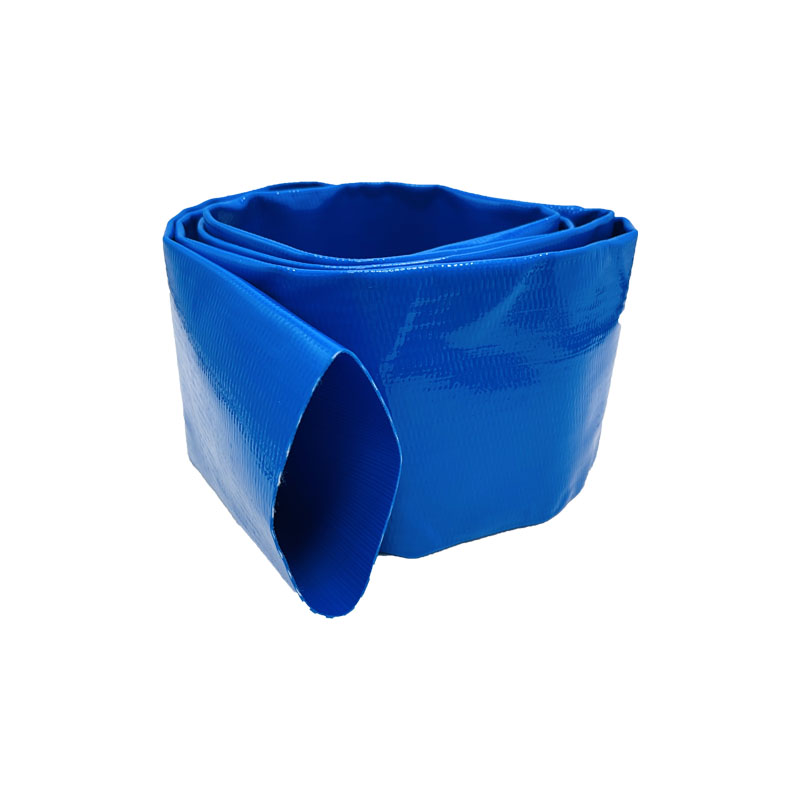
For example, GSD Rubber's PVC layflat hoses have different working pressure ratings depending on their duty level and diameter. Its light-duty models are listed at 2–3 bar, while standard-duty models are listed at 4 bar.
The working pressure is the key value to check when matching a hose to a pump, compressor, or fluid transfer system.
Burst pressure is the internal pressure at which a hose sample ruptures during a controlled test. It indicates the hose's failure limit under the specified test conditions.
Burst pressure is normally higher than working pressure. However, it must not be treated as an allowable operating pressure.
For example, GSD Rubber lists a working pressure of 40 bar and a burst pressure of 120 bar for certain three-layer PVC spray hose models. This ratio applies to the listed products and should not be assumed for every PVC hose.
Always use the working pressure, rather than the burst pressure, when selecting a hose for continuous service.
Proof pressure is a specified test pressure used to check whether a hose can withstand a certain pressure without leakage or unacceptable damage.
It is different from burst pressure because the purpose of a proof test is to verify performance without causing the hose to rupture.
The required proof pressure and test procedure depend on the applicable product standard, hose design, and manufacturer's specifications. There is no single proof-pressure ratio that applies to every PVC hose.
If proof pressure is important for your project, request the relevant test information from the hose manufacturer.
PVC hose pressure ratings vary according to hose construction, reinforcement, diameter, and intended application.
The following examples are taken from GSD Rubber's published product specifications.
PVC Hose Type | Working Pressure | Burst Pressure |
|---|---|---|
Light-duty PVC layflat hose | 2–3 bar | 6–9 bar |
Standard-duty PVC layflat hose | 4 bar | 12–15 bar |
3-layer PVC spray hose | 40 bar | 120 bar |
5-layer PVC spray hose | 50–60 bar | 150–180 bar |
These figures are product-specific examples, not universal pressure ranges for all PVC hoses. The actual rating must be confirmed for the selected model and size.
For example, GSD's PVC layflat hose uses a PVC tube and cover with high-tensile polyester braiding. Its product specifications list different pressure ratings for light-duty and standard-duty models.
Its PVC spray hose uses one or two layers of high-tensile polyester fiber reinforcement. The published specifications show that different sizes and constructions may have different working pressures.
When comparing products, check the exact model, inner diameter, reinforcement structure, working pressure, and burst pressure.
Several factors determine how much pressure a PVC hose can safely handle. Understanding them helps buyers compare products and avoid selecting a hose based on pressure figures alone.
PVC provides flexibility and resistance to many common fluids. However, the pressure capacity of a hose also depends on its reinforcement structure.
Many pressure-rated PVC hoses use polyester fiber or yarn reinforcement. This layer helps the hose maintain its shape under internal pressure.
The number of reinforcement layers, fiber strength, and braiding structure can affect pressure performance. A reinforced PVC hose generally has a different pressure capacity from an unreinforced PVC tube.
Hose diameter and wall thickness are important design factors. Different sizes may have different pressure ratings, even within the same product series.
A larger inner diameter does not automatically mean a higher or lower pressure rating. The hose structure and reinforcement must also be considered.
Always check the pressure rating for the exact diameter and model you plan to purchase.
Temperature can affect the flexibility and pressure performance of PVC hoses.
High temperatures may soften PVC and reduce its ability to maintain its shape under pressure. Low temperatures may make some PVC compounds less flexible and more vulnerable to damage during bending or impact.
External conditions also matter. Long-term exposure to sunlight, abrasion, chemicals, or repeated bending can affect hose condition.
Check the manufacturer's specified temperature range and confirm that it matches the actual operating environment.
The fluid being transferred affects hose selection. Water, air, oils, and chemical solutions may require different hose materials and constructions.
Chemical compatibility is especially important when handling aggressive fluids. A hose that is suitable for water transfer may not be suitable for a particular chemical.
The application also affects pressure requirements. Irrigation, pump discharge, agricultural spraying, and industrial fluid transfer may require different hose designs.
Choose a hose based on both its pressure rating and its compatibility with the working fluid.
Selecting a suitable PVC hose requires more than checking one pressure figure. Consider the complete operating conditions before making a decision.
Start by identifying the maximum pressure that the hose will experience during normal operation.
Check the pump or equipment specifications and consider pressure fluctuations during startup, shutdown, and changes in flow.
Select a hose whose working pressure meets the requirements of the system under the specified operating conditions. Do not use burst pressure as the selection value.
Review both working pressure and burst pressure in the manufacturer's product data sheet.
Working pressure indicates the rated limit for normal service. Burst pressure indicates the pressure at which a test sample fails.
A higher burst pressure does not automatically mean that a hose is suitable for your application. The working pressure must be appropriate for the system.
Pressure ratings may depend on operating temperature. A hose's published rating should not be assumed to remain unchanged at every temperature.
Also consider pressure surges, pulsation, and other dynamic conditions. If the system experiences frequent pressure changes, discuss the operating conditions with the manufacturer before selecting a hose.
Before placing an order, confirm the following information:
Hose type and model
Inner and outer diameter
Working pressure
Burst pressure
Working temperature range
Reinforcement material and structure
Fluid compatibility
Applicable product standards, if required
If the published data does not cover your operating conditions, ask the manufacturer for technical confirmation.
Understanding pressure ratings helps prevent several common purchasing and operating mistakes.
Burst pressure is a failure-test value, not a normal operating limit. Running a hose close to its burst pressure can create serious safety risks.
Always select a hose according to its working pressure.
PVC hoses are available in different constructions and applications. A layflat water discharge hose and a reinforced spray hose do not have the same pressure requirements.
Compare the specifications of the exact product rather than relying on general pressure ranges.
A pressure rating should be considered together with the manufacturer's temperature range. Operating outside the specified range may affect hose performance and service life.
Pressure is important, but it is not the only selection factor. Diameter, flexibility, fluid compatibility, reinforcement, temperature, and connection requirements also affect suitability.
A hose with a higher pressure rating may not be the best choice if it does not meet the other requirements of the system.
Regular inspection helps identify damage before it leads to leakage or hose failure.
Check the hose for visible cracks, cuts, bulges, exposed reinforcement, leakage, or unusual deformation. Pay attention to areas near fittings and connection points, where mechanical stress may be concentrated.
Also check whether the hose has been exposed to excessive pressure, unsuitable temperatures, incompatible chemicals, or severe abrasion.
Replace a hose if it shows signs of structural damage or no longer meets the operating requirements. Follow the manufacturer's inspection and replacement recommendations.
Do not perform pressure tests on installed hoses without the correct equipment, procedures, and safety precautions. Testing should follow the applicable manufacturer's instructions and relevant standards.
Understanding working pressure, burst pressure, and proof pressure is essential when selecting a PVC hose. Working pressure determines the rated limit for normal operation, while burst pressure indicates the failure point during testing. Proof pressure is used to verify performance under a specified test condition.
The correct PVC hose pressure rating depends on its material, reinforcement, diameter, temperature range, and application. Always check the specifications for the exact hose model and confirm that its working pressure matches your system requirements.
GSD Rubber supplies PVC hose options for applications such as water transfer, irrigation, and agricultural spraying. Explore its PVC hose range or contact the team to discuss your hose requirements.
Send us your inquiry today!
PVC hose pressure rating describes the pressure limits specified for a hose. Key values include working pressure, burst pressure, and, where applicable, proof pressure.
Working pressure is the rated pressure for normal operation. Burst pressure is the pressure at which a hose sample ruptures during testing. Burst pressure must not be used as the operating limit.
No. The relationship depends on the hose design and product specifications. Always check the manufacturer's data sheet for the exact model.
Proof pressure is a specified test pressure used to check whether a hose can withstand pressure without leakage or unacceptable damage. Its value and test procedure depend on the applicable requirements.
Check the system's maximum operating pressure, hose working pressure, temperature range, fluid compatibility, diameter, and reinforcement. Confirm the specifications for the exact hose model before ordering.