Views: 0 Author: Site Editor Publish Time: 2026-10-08 Origin: Site
Choosing between 1SN and 2SN hydraulic hoses requires more than comparing the number of steel wire braids. Buyers must also consider working pressure, hose size, bend radius, fluid compatibility, and fitting requirements.
Both hose types use steel wire braid reinforcement, but their constructions differ. A 1SN hose has one steel wire braid, while a 2SN hose has two. This difference affects pressure capacity, flexibility, weight, and installation space.
This guide explains the main differences between 1SN and 2SN hydraulic hoses and how to select the right type for your hydraulic system.
Table of Contents
The main difference between 1SN and 2SN hydraulic hoses is the number of steel wire braid reinforcement layers. Other construction details depend on the manufacturer's design and product specifications.
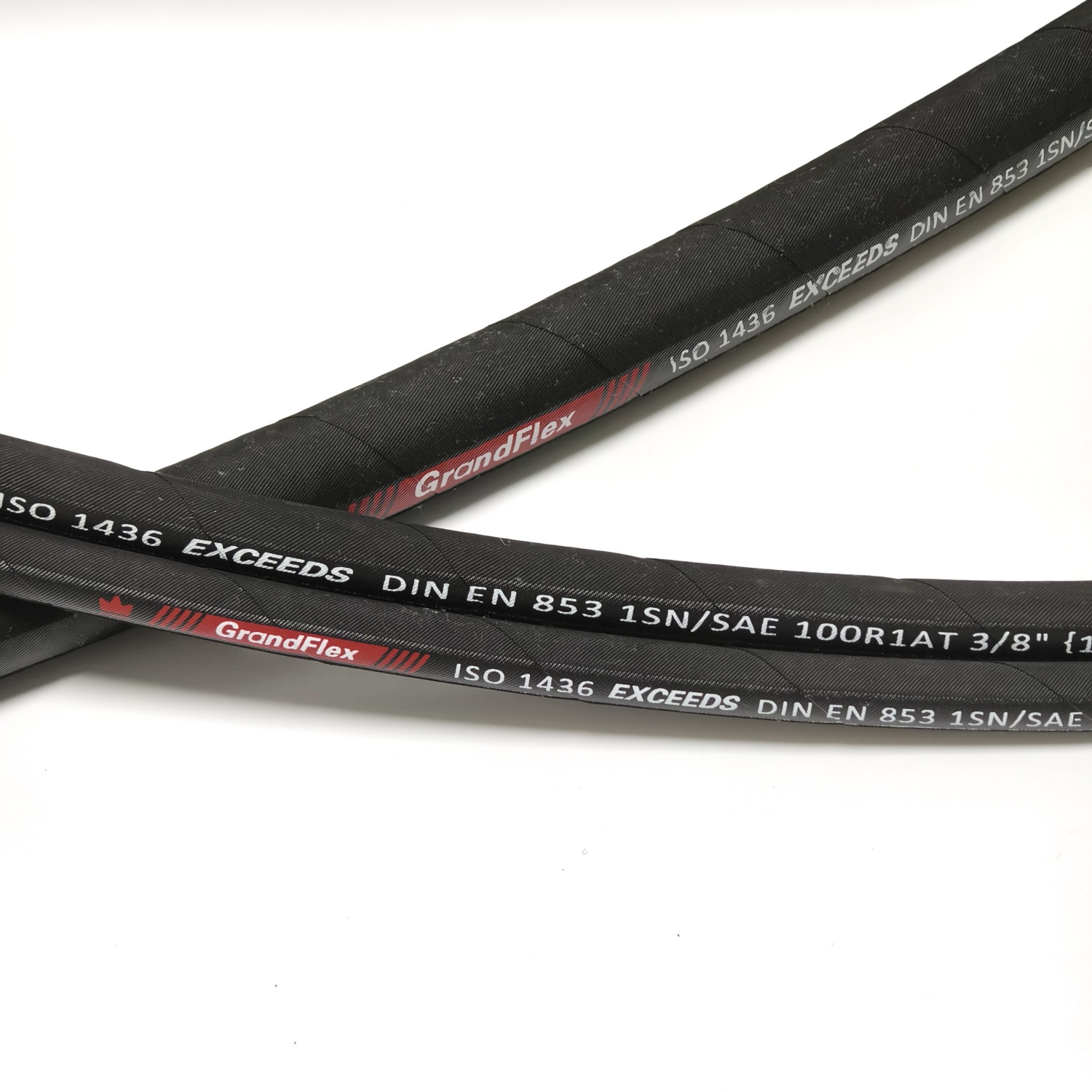
A 1SN hydraulic hose has one layer of high-tensile steel wire braid between the inner tube and outer cover.
Its main components are:
Inner tube: Synthetic rubber formulated for the intended hydraulic fluid.
Reinforcement: One layer of high-tensile steel wire braid.
Outer cover: Synthetic rubber designed to protect against environmental exposure and abrasion.
The single braid construction can offer good flexibility for suitable hydraulic applications. Buyers should still check the specified minimum bend radius and working pressure for the selected hose size.
Learn more about the EN 853 1SN hydraulic hose.
A 2SN hydraulic hose has two layers of high-tensile steel wire braid reinforcement. The additional layer generally provides a higher working pressure rating than a comparable 1SN hose.
Its main components include:
Inner tube: Synthetic rubber selected for fluid compatibility.
Reinforcement: Two layers of high-tensile steel wire braid.
Outer cover: Synthetic rubber that protects the hose against wear and environmental exposure.
The double braid construction is suitable for many higher-pressure hydraulic circuits. However, the hose's actual pressure rating, flexibility, and dimensions must be confirmed from its technical data sheet.
Explore the EN 853 2SN hydraulic hose.
Feature | 1SN Hydraulic Hose | 2SN Hydraulic Hose |
|---|---|---|
Steel wire reinforcement | One braid layer | Two braid layers |
Working pressure | Generally lower than comparable 2SN hoses | Generally higher than comparable 1SN hoses |
Flexibility | Often more flexible | Often stiffer |
Weight and outer diameter | Check the product specification | Check the product specification |
Minimum bend radius | Check the manufacturer's data | Check the manufacturer's data |
Typical selection | Suitable for systems within its rated pressure | Suitable for systems requiring a higher rated pressure |
The inner tube and cover compounds are not determined by braid count alone. Confirm material compatibility and environmental resistance for the specific product.
Working pressure is one of the most important factors when selecting a hydraulic hose. The correct rating depends on the hose type, nominal size, construction, and manufacturer.
A 2SN hose generally supports a higher working pressure than a comparable 1SN hose. However, the difference is not a fixed multiplier across all sizes and products.
Do not select a hose based on a generic pressure table alone. Instead, compare the manufacturer's published specifications for the exact size and model.
Before choosing a hose, confirm:
Nominal inside diameter and hose size.
Maximum working pressure.
Burst pressure listed in the technical data sheet.
Operating temperature and hydraulic fluid.
Pressure fluctuations and impulse requirements.
Pressure rating of the complete hose assembly, including its fittings.
The complete assembly must remain within the rating of its lowest-rated component. A hose with a suitable pressure rating does not make an assembly safe if its fittings or crimp connections are unsuitable.
Working pressure is the maximum pressure specified for normal operation under the manufacturer's stated conditions. Burst pressure is a separate test value and must not be treated as an allowable operating pressure.
Never use burst pressure as the basis for normal system operation. Pressure surges, high temperatures, fluid compatibility, and installation errors can affect hose performance and service life.
If the required system pressure exceeds the selected 2SN hose rating, evaluate a suitable higher-pressure hose type, such as an EN 856 4SP or 4SH hydraulic hose. Confirm the required pressure rating and application suitability before making a change.
Flexibility and installation space can affect hose selection as much as pressure capacity. A hose must fit the routing path without kinking, excessive bending, or unnecessary stress at the fittings.
The minimum bend radius is the smallest radius at which a hose can be bent under the conditions specified by its manufacturer.
A 1SN hose may offer a smaller minimum bend radius than a comparable 2SN hose. However, the actual values vary by model and size.
Always check the product data before designing the routing path. Bending a hose below its specified minimum radius can damage the reinforcement or inner tube and shorten service life.
A second steel wire braid can affect the hose's weight and outside dimensions. The amount of difference depends on the particular products being compared.
Check the published outside diameter and weight per meter when space, hose supports, or moving machinery are important. Do not assume that every 2SN hose is a fixed number of millimeters larger or a fixed percentage heavier than a 1SN hose.
When installing either hose type:
Avoid sharp bends and contact with sharp edges.
Allow sufficient movement for the equipment's full operating range.
Prevent twisting during assembly.
Support the hose where necessary without crushing it.
Keep the hose away from excessive heat and damaging abrasion.
For mobile machinery or compact hydraulic systems, compare the minimum bend radius, outside diameter, and pressure rating together rather than choosing by braid count alone.
The right hose depends on the system's pressure requirements and operating conditions. Application names alone are not enough to determine the correct hose type.
A 1SN hose may be suitable for general hydraulic circuits when its rated pressure and other specifications meet the system requirements.
Potential applications include:
Agricultural machinery.
Construction equipment.
General industrial hydraulic systems.
Auxiliary hydraulic circuits within the hose's rated limits.
For each application, confirm the actual pressure, fluid, temperature, and movement requirements before selecting the hose.
A 2SN hose is often selected for hydraulic circuits that require a higher working pressure than a comparable 1SN hose can provide.
Potential applications include:
Hydraulic lines on construction machinery.
Agricultural equipment requiring higher-pressure circuits.
Industrial hydraulic machinery.
Mobile hydraulic systems with demanding pressure cycles.
The hose must still meet the system's rated pressure, impulse requirements, temperature limits, and fitting specifications.
Use this checklist when comparing 1SN and 2SN hydraulic hoses:
Confirm system pressure. Include the maximum operating pressure and relevant pressure surges.
Select the correct size. Verify the nominal inside diameter and required flow capacity.
Check fluid compatibility. Confirm that the inner tube and cover materials suit the fluid and temperature.
Review installation limits. Compare bend radius, outside diameter, and hose movement.
Verify the assembly. Match the hose, fittings, ferrules, and crimping process according to the manufacturer's instructions.
Confirm standards and markings. Check the required standard, model designation, and pressure rating.
For more options, visit the Grantseed Rubber hydraulic hose product range.
Correct installation helps prevent premature hose failure. Both 1SN and 2SN hose assemblies must be installed and maintained according to the manufacturer's instructions.
Do not assume that fittings or ferrules are interchangeable just because two hoses have the same nominal inside diameter.
Hose outside diameter, reinforcement construction, fitting design, and crimp dimensions must match the approved assembly specification. Incorrect crimping can lead to leakage or fitting separation under pressure.
Use the specified hose, fitting, ferrule, and crimping procedure. Follow the manufacturer's requirements for assembly inspection and testing.
Hose twisting can increase stress on the reinforcement and fittings. Check the hose lay line, where provided, during installation to help identify unwanted rotation.
Do not bend the hose below its minimum bend radius or install it under excessive tension. Allow for the equipment's normal movement and secure the hose without crushing it.
Inspect hydraulic hose assemblies for:
Cuts, cracks, blisters, or damaged covers.
Exposed or corroded wire reinforcement.
Leakage around fittings.
Kinking, flattening, or unusual deformation.
Signs of heat damage, abrasion, or material deterioration.
Replace damaged hoses and investigate the cause of failure before installing a replacement. Set inspection and replacement intervals according to the manufacturer's guidance, operating conditions, and applicable safety requirements.
For technical questions about product selection, contact Grantseed Rubber with the hose size, pressure, fluid, temperature, and application details.
A 1SN hose has one steel wire braid reinforcement layer, while a 2SN hose has two. The additional braid generally allows a higher working pressure, depending on hose size and product specifications.
No. A 2SN hose generally has a higher working pressure, but the difference varies by size, model, and manufacturer. Always compare the published ratings for the exact hoses.
Not automatically. Check the working pressure, fluid compatibility, dimensions, minimum bend radius, fittings, and approved assembly requirements before replacing a hose.
Not necessarily. Thread compatibility alone does not confirm assembly compatibility. Use fittings, ferrules, and crimp specifications approved for the selected hose.
Compare maximum working pressure, hose size, fluid and temperature requirements, bend radius, and fitting compatibility. Select a hose assembly that meets all system requirements and the applicable standards.
The main difference between 1SN and 2SN hydraulic hoses is their steel wire braid reinforcement. A 1SN hose has one braid layer, while a 2SN hose has two and generally supports higher working pressure.
However, braid count alone does not determine whether a hose is suitable. Buyers should verify pressure ratings, size, fluid compatibility, bend radius, fittings, and installation requirements for the exact product.
Grantseed Rubber supplies hydraulic hoses for industrial and mobile equipment applications. Contact the team with your technical requirements to identify a suitable hose specification and request a quotation.