Views: 226 Author: Site Editor Publish Time: 2026-09-08 Origin: Site
Table of Contents
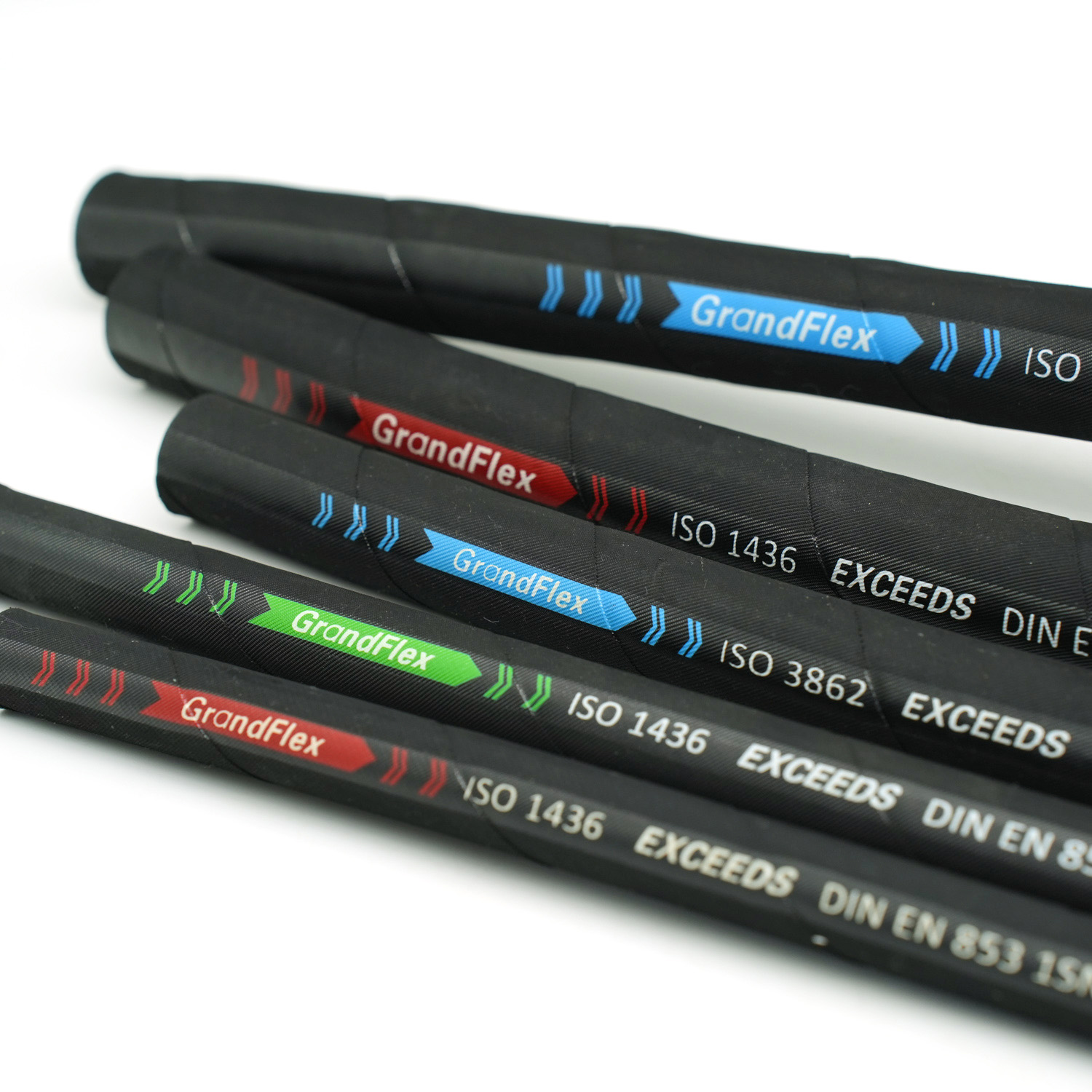
Selecting the right hydraulic hose standard determines whether high-pressure fluid systems run efficiently or suffer catastrophic burst failures, fluid leaks, and expensive downtime. When engineers, equipment operators, and procurement agents evaluate DIN EN 853 vs EN 856 Hydraulic Hose Standards: Key Differences, they are comparing two fundamentally different structural design philosophies: wire braided construction versus wire spiral construction.
While both European standards govern high-pressure hydraulic hose lines used across construction, mining, and industrial machinery, their structural reinforcement layers, impulse cycle resistance, operating pressure ratings, and minimum bend radii vary significantly. Using a wire-braided line where a heavy-duty spiral wire line is required can cause sudden wire fatigue, fluid leakage, and equipment failure.
Below is an engineering analysis comparing DIN EN 853 and EN 856 standards, covering structural differences, pressure limits, sub-type classifications, and application criteria to help you select the ideal hydraulic hose assembly for your machinery.
The fundamental distinction between DIN EN 853 and EN 856 lies in how steel reinforcement wires wrap around the inner synthetic rubber tube. This design choice determines how each flexible hydraulic hose responds to pressure surges and repeated expansion cycles.
DIN EN 853 Construction (Wire Braid):
[ Inner Rubber Tube ] ──► [ Cross-Woven Wire Braid (1SN / 2SN) ] ──► [ Synthetic Rubber Outer Cover ]

EN 856 Construction (Wire Spiral):
[ Inner Rubber Tube ] ──► [ Parallel Alternating Wire Layers (4SP / 4SH) ] ──► [ Synthetic Rubber Outer Cover ]
DIN EN 853 covers wire-braided hydraulic hose constructions. High-tensile steel wire is crisscrossed in a woven basket pattern over the inner core tube. This crisscross weave yields higher flexibility and lighter total weight per meter, making it easier to bend in tight spaces.
EN 856 covers multi-spiral steel wire reinforced hydraulic hose constructions. High-tensile steel wires wrap around the inner tube in parallel, alternating spiral layers. Instead of interweaving, each wire layer runs parallel to its neighbor, insulated by thin rubber cushions between layers. This spiral construction prevents wire friction during extreme pressure surges, extending service life under heavy impulse loads.
Both standards include distinct sub-types that define outer cover skiving requirements and specific pressure ratings for each hydraulic hose pipe.
EN Standards Classification Tree:
├── DIN EN 853 (Wire Braided)
│   ├── 1ST / 2ST (Thick Cover - Requires Outer Skiving)
│   └── 1SN / 2SN (Thin Cover - No Outer Skiving Required)
└── EN 856 (Wire Spiral)
    ├── 4SP (Four-Spiral Medium/High Pressure)
    ├── 4SH (Four-Spiral Heavy-Duty High Pressure)
    ├── R12 (Four-Spiral Heavy Impulse)
    └── R13 (Multi-Spiral Extreme Duty)
Type 1ST: Single steel wire braid reinforcement with a thick outer rubber cover. It requires skiving (stripping the outer rubber layer off) before crimping end fittings.
Type 2ST: Double steel wire braid reinforcement with a thick outer rubber cover. It also requires outer cover skiving prior to fitting assembly.
Type 1SN: Single steel wire braid reinforcement with a thin outer cover. It allows non-skive crimping, where fittings crimp directly over the outer cover.
Type 2SN: Double steel wire braid reinforcement with a thin outer cover. It represents the standard non-skive double-braid hydraulic hose used globally.
Type 4SP: Four spiral steel wire layers designed for medium-to-high pressure applications with moderate flexibility needs.
Type 4SH: Four spiral steel wire layers built with higher tensile steel wire for heavy-duty, high-pressure continuous applications.
Type R12: Four-spiral heavy impulse line designed for high temperature and continuous pressure variation environments.
Type R13: Multi-spiral (usually six spiral wire layers in larger sizes) engineered for severe high-pressure, heavy-impulse conditions.
Operating pressure ratings highlight the performance gap between these two standard families. Comparing pressure limits across matching nominal internal diameters demonstrates why spiral designs are preferred for heavy machinery.
Nominal Size (Dash Size) | Inner Diameter (Inches / mm) | DIN EN 853 2SN Max Working Pressure (Bar / PSI) | EN 856 4SP Max Working Pressure (Bar / PSI) | EN 856 4SH Max Working Pressure (Bar / PSI) |
-04 | 1/4" (6.4 mm) | 400 Bar / 5,800 PSI | 450 Bar / 6,525 PSI | — |
-06 | 3/8" (9.5 mm) | 330 Bar / 4,785 PSI | 445 Bar / 6,450 PSI | — |
-08 | 1/2" (12.7 mm) | 275 Bar / 3,988 PSI | 415 Bar / 6,018 PSI | 420 Bar / 6,090 PSI |
-12 | 3/4" (19.0 mm) | 215 Bar / 3,118 PSI | 350 Bar / 5,075 PSI | 420 Bar / 6,090 PSI |
-16 | 1" (25.4 mm) | 165 Bar / 2,392 PSI | 280 Bar / 4,060 PSI | 380 Bar / 5,510 PSI |
-20 | 1-1/4" (31.8 mm) | 125 Bar / 1,812 PSI | 210 Bar / 3,045 PSI | 350 Bar / 5,075 PSI |
-24 | 1-1/2" (38.1 mm) | 90 Bar / 1,305 PSI | 185 Bar / 2,682 PSI | 290 Bar / 4,205 PSI |
-32 | 2" (50.8 mm) | 80 Bar / 1,160 PSI | 165 Bar / 2,392 PSI | 250 Bar / 3,625 PSI |
(Note: Pressure data reflects standard EN specifications. Always verify exact manufacturer technical data sheets before final specification.)
Pressure Superiority: EN 856 4SH hoses handle significantly higher continuous working pressures than DIN EN 853 2SN hoses in sizes larger than 1/2 inch.
Large Bore Integrity: As inner diameter increases, DIN EN 853 braided lines experience rapid working pressure drops. EN 856 spiral lines maintain high working pressure ratings even at 1-1/4 inch to 2 inch diameters.
Burst Safety Ratio: Standard designs maintain a 4:1 safety factor (burst pressure is four times higher than maximum operating pressure) across both standard series.
Working pressure alone does not fully explain hydraulic hose longevity. Modern machinery exposes fluid lines to continuous pressure shocks (impulses) as control valves open and close rapidly under load.
In a braided hydraulic rubber hose (DIN EN 853), crossing wires rub against each other during rapid pressure spikes. Over millions of expansion cycles, this internal wire-on-wire friction creates micro-abrasions along the steel strands. These invisible micro-cracks eventually cause wire fatigue and burst failure.
In a spiral high pressure hydraulic hose (EN 856), parallel wire layers do not cross. When pressure spikes occur, the individual wire strands slide smoothly over the rubber cushion layers without touching cross wires.
Impulse Cycle Resistance Comparison:
DIN EN 853 1SN/2SN  ──► Standard Testing Target: ~200,000 Impulse Cycles
EN 856 4SP/4SH       ──► Heavy Impulse Target: ~400,000 to 1,000,000+ Impulse Cycles
Machines operating with frequent hydraulic shocks—such as rock breakers, excavator booms, and high-tonnage forging presses—benefit from spiral EN 856 lines. Their high impulse fatigue life reduces unexpected line ruptures under harsh conditions.
While EN 856 provides superior impulse strength and pressure capacity, DIN EN 853 braided designs retain clear advantages in flexibility and routing ease.
DIN EN 853 Braided Lines: Woven wire structures bend smoothly with lower force. They allow tighter installations in compact mobile machinery compartments without putting strain on end connections.
EN 856 Spiral Lines: Four alternating layers of thick steel wire create higher wall stiffness. Bending an EN 856 line requires significantly higher force, and its minimum bend radius is generally wider than a comparable braided line.
Bend Radius & Flexibility Comparison:
DIN EN 853 2SN ──► Lower Bending Force ──► Tighter Routing in Compact Enclosures
EN 856 4SH     ──► Rigid Structure     ──► Requires Larger Routing Curves & Heavy Bracket Supports
Avoid Over-Bending: Forcing an EN 856 spiral line past its minimum bend radius compresses the inner spiral layers, separating the outer wire turns and shortening service life.
Torsion Protection: Never twist a hydraulic hose assembly during installation. A 7-degree twist along the line axis can reduce service life by up to 90 percent.
Weight Factors: EN 856 spiral lines weigh more per meter than DIN EN 853 braided lines. Mobile booms must account for this added static weight when routing long distances.
Selecting between DIN EN 853 and EN 856 comes down to matching equipment operating characteristics with line capabilities.
Application Matching Matrix:
[ Medium Pressure / Compact Space / Light Weight ]  ──► Choose DIN EN 853 (1SN / 2SN)
[ High Pressure / Severe Impulse / Heavy Machinery ] ──► Choose EN 856 (4SP / 4SH)
Medium-Pressure Hydraulic Circuits: System working pressures under 250 Bar (3,600 PSI) where severe pressure spikes are rare.
Compact Engine Bays & Steering Systems: Tight routing paths in agricultural tractors, forklifts, and light mobile machinery.
Low-Weight Equipment Booms: Aerial work platforms and light cranes where lower line weight improves boom payload performance.
Cost-Sensitive General Installations: Secondary return lines and low-impulse actuators where budget efficiency matters.
Heavy Construction & Mining Equipment: Main pump-to-cylinder lines on excavators, wheel loaders, bulldozers, and trenching equipment.
Severe Impulse Machinery: Hydraulic breakers, piling drivers, demountable attachments, and high-duty cycle industrial presses.
Large-Bore Main Lines: High-flow hydraulic circuits over 1 inch nominal size where working pressures must stay above 250 Bar.
Harsh Industrial Environments: Steel mills, underground mining rigs, and continuous oilfield operations where line failure causes expensive safety hazards or shutdown costs.
Selecting reliable industrial hydraulic hose supplies requires partnering with experienced manufacturers who maintain strict quality controls and international testing standards.
At Qingdao Grantseed Rubber Co., Ltd., we manufacture certified fluid conveyance solutions for global equipment builders, industrial distributors, and aftermarket specialists. Operating under ISO 9001:2008 certified quality control frameworks, our facilities produce braided and spiral line assemblies that meet or exceed international specifications.
Comprehensive Standard Testing: We test line assemblies for impulse resistance, burst limits, ozone protection, and abrasion resistance, ensuring compliance with DIN EN 853, EN 856, and SAE J517 guidelines.
Advanced Manufacturing Infrastructure: Our multi-line facilities feature automated high-speed wire braiders and heavy-duty spiral winding systems designed to produce uniform wire tension across long production runs.
OEM & Custom Engineering Support: We supply custom hose lengths, specialized abrasion-resistant outer covers, custom brand labeling, and complete crimped fitting assemblies tailored to client equipment requirements.
Global Supply Reach: We deliver reliable fluid transfer products—including high-pressure wire braided lines, heavy-duty spiral lines, and industrial flexible hydraulic hose products—to clients across more than 60 countries.
Our engineering team works directly with B2B buyers to verify performance requirements and streamline supply chain orders.
Understanding DIN EN 853 vs EN 856 Hydraulic Hose Standards: Key Differences enables procurement specialists and design engineers to optimize fluid power performance. DIN EN 853 wire-braided lines offer maximum flexibility, lighter weight, and economical value for low- to medium-pressure applications. EN 856 wire-spiral lines provide high impulse resistance, burst strength, and high-pressure capacity for heavy construction, mining, and high-duty machinery.
Evaluating pressure demands, impulse severity, and installation bend radii ensures every hydraulic line delivers safe, reliable service over its full operating lifecycle.
Yes, replacing a DIN EN 853 2SN line with an EN 856 4SP line is generally safe because 4SP handles higher working pressures and offers superior impulse resistance. However, check that the stiffer 4SP line can bend within the available routing space without stressing end fittings.
No. You should not replace an EN 856 4SH line with a DIN EN 853 2SN line in a high-pressure system. The 2SN line lacks the pressure capacity and impulse fatigue resistance of the 4SH line, which can cause sudden wire failure and premature line burst.
Type 1SN has a thinner outer rubber cover designed for non-skive crimping, where fittings attach directly without stripping the outer cover. Type 1ST has a thicker outer cover that must be skived (stripped back) before crimping fittings.
Spiral wire layers run parallel without interweaving. When pressure shocks expand the line, individual wire strands slide past each other without rubbing. Woven braid strands cross over one another, creating friction and wear spots during rapid impulse cycles.