Views: 0 Author: Site Editor Publish Time: 2026-06-29 Origin: Site
In the evolving landscape of industrial fluid management and agricultural water distribution, the demand for reliable, adaptable, and highly efficient mobile piping systems has never been greater. Modern operations require equipment that can withstand rigorous environmental conditions while remaining easy to deploy, transport, and store. Among the most effective solutions available today are PVC Lay Flat Hoses, which have revolutionized how industries approach water discharge, dewatering, and temporary fluid transfer. These hoses provide an exceptional balance of flexibility, durability, and performance, making them an indispensable tool across a wide multitude of sectors. By integrating advanced material science with practical, user-focused design elements, these industrial and water hoses deliver consistent results in environments ranging from agricultural fields to complex construction sites.
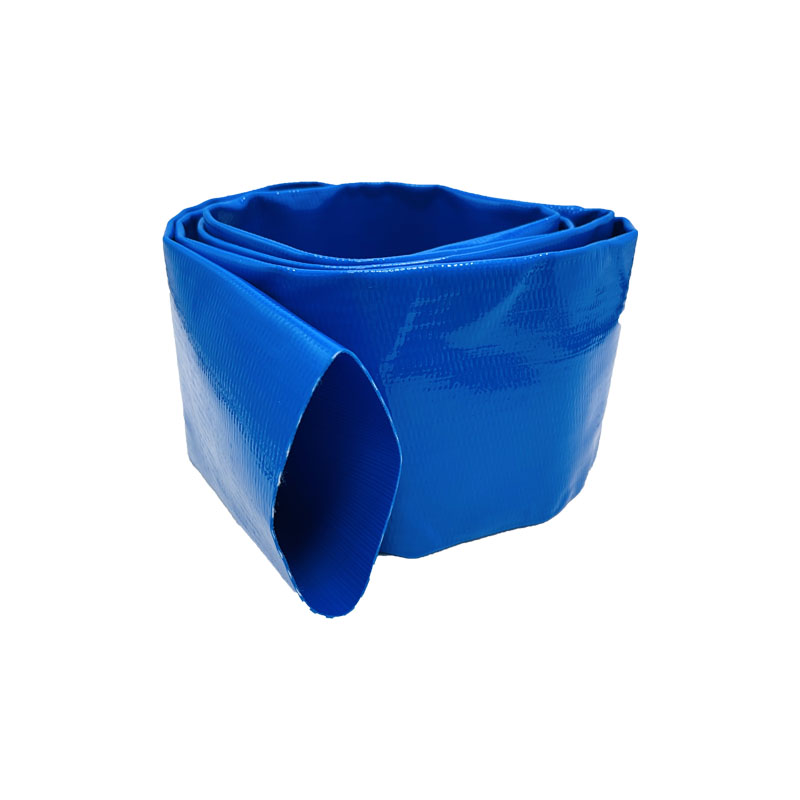
PVC Lay Flat Hoses provide efficient fluid transfer for agricultural and industrial applications.
The transition from rigid piping to flexible, temporary solutions highlights a broader industry trend toward operational agility. Traditional rigid pipes, while useful for permanent installations, present significant logistical challenges when mobility is required. They are heavy, difficult to transport, and require substantial storage space. In contrast, flexible hose solutions designed specifically for mobile or temporary piping systems eliminate these bottlenecks. The PVC Layflat Hose manufactured by Grantseed Rubber exemplifies this shift, offering a highly engineered alternative that meets the rigorous demands of temporary fluid conveyance without sacrificing structural integrity or pressure performance.
Understanding the performance capabilities of these hoses requires a close examination of their construction. The manufacturing process involves precise engineering to ensure that the final product can handle the dynamic stresses of fluid transfer. The core construction relies on a synergistic combination of synthetic materials, specifically formulated to provide both flexibility and strength. This dual-layer approach ensures that the hose can expand to accommodate fluid flow under pressure and then return to its flat state when emptied.
The foundation of these PVC Lay Flat Hoses is their high-quality polyvinyl chloride (PVC) tube and cover. PVC is selected for its inherent resistance to environmental degradation and its smooth internal surface, which minimizes friction loss during fluid transfer. The hose body is specifically engineered to be non-toxic and low-odor, which is a critical consideration for operators handling the equipment frequently. Furthermore, the PVC material is highly corrosion and aging resistant. This resistance is vital for maintaining usability in wet outdoor environments, where constant exposure to moisture, mud, and varying weather conditions would rapidly degrade lesser materials. By utilizing a robust PVC formulation, the hose maintains its structural integrity and flexibility over extended periods of rigorous outdoor use.
While the PVC provides the necessary fluid containment and environmental protection, the internal reinforcement is what gives the hose its pressure-handling capabilities. Sandwiched between the PVC tube and cover is a layer of high-tensile polyester braiding. This reinforcement is crucial for maintaining pressure performance and dimensional stability. When pressurized water or fluid surges through the hose, the polyester braiding prevents the PVC from over-expanding or bursting. The high-tensile nature of the polyester fibers ensures that the hose can withstand significant internal forces without elongating or twisting excessively, thereby maintaining a consistent flow rate and preventing potential ruptures during critical operations.
Beyond material composition, the physical design of the hose plays a massive role in its practical application. Industrial operators and agricultural workers face constant challenges regarding transportation logistics, storage space, and deployment speed. The design features of these hoses directly address these operational pain points.
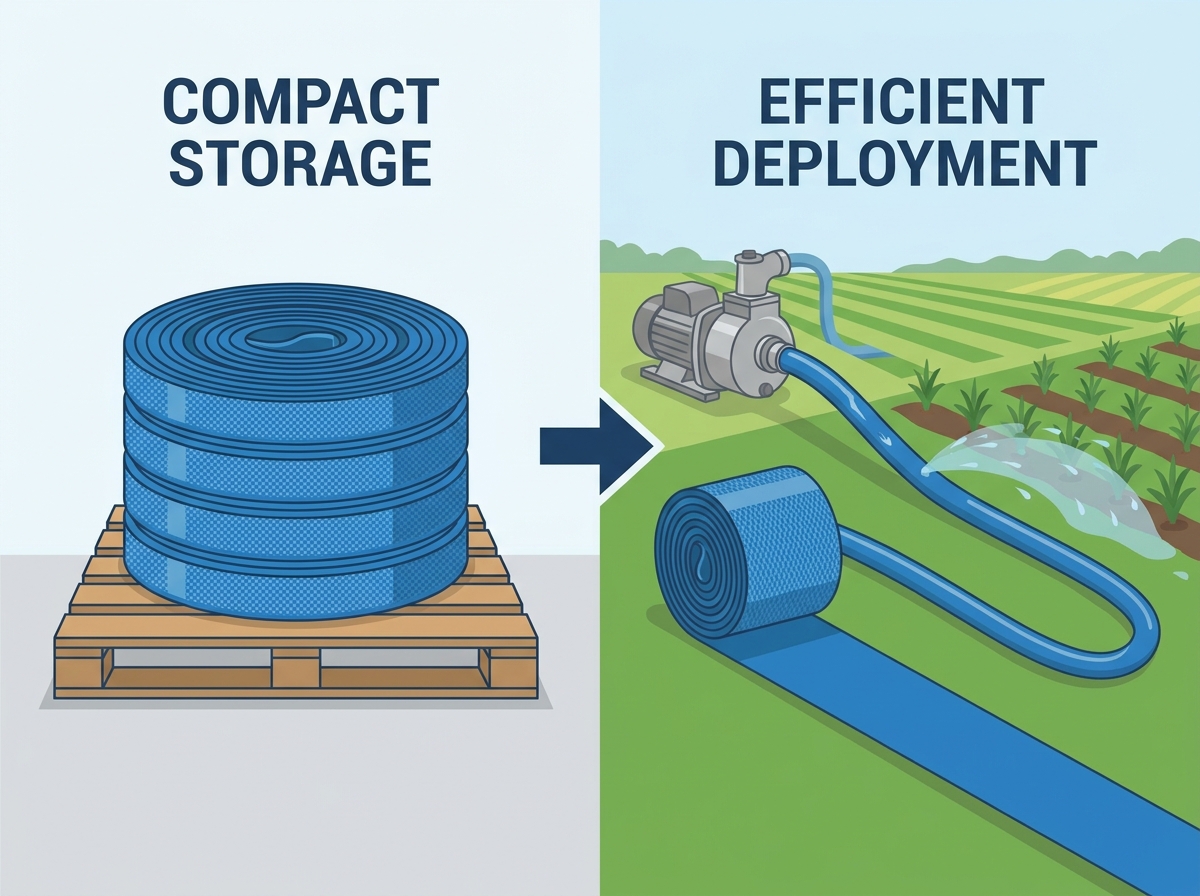
One of the most defining characteristics of these hoses is their flat-roll design. Unlike rigid pipes or standard round hoses that maintain their shape when empty, these hoses collapse completely flat when not under pressure. This design drastically reduces storage volume, allowing massive lengths of hose to be coiled into compact, manageable rolls. This reduction in volume translates directly to improved transport efficiency. Multiple rolls can be stacked on a single pallet or loaded into the back of a utility vehicle, enabling rapid deployment across large agricultural tracts or sprawling construction sites. When the operation is complete, the hose is easily drained, rolled flat, and stored away, requiring a fraction of the warehouse space needed for traditional piping.
In complex industrial or agricultural environments, managing multiple fluid transfer lines simultaneously can lead to confusion and potential safety hazards. To mitigate this, these hoses are available in multiple colors, specifically blue, orange, and red. This color variety allows for immediate visual application differentiation. For instance, an operator might designate blue hoses for clean water discharge, orange for light chemical transfer, and red for high-pressure dewatering tasks. This simple yet highly effective visual management system improves operational safety, reduces the risk of cross-contamination, and streamlines the setup and breakdown processes on busy job sites.
To ensure suitability for various demanding applications, it is essential to understand the precise technical specifications of these hoses. The performance metrics dictate the safe operating limits and help operators select the appropriate duty rating for their specific fluid transfer needs. The hoses are engineered to operate within a specific working temperature range of -10°C (-50°F) to +60°C (+140°F), making them versatile enough for both chilly morning deployments and hot afternoon operations. Across all models, the burst pressure is strictly rated at 3 times the working pressure, providing a substantial safety margin against unexpected pressure spikes or water hammer effects.
For applications that require efficient fluid transfer without extreme pressure demands, the Light Duty variant offers an optimal solution. These hoses provide a working pressure of 2 to 3 bar (30 to 45 psi), with a corresponding burst pressure of 6 to 9 bar (90 to 135 psi). They are highly adaptable to various flow volume requirements, available in a wide range of inner diameters from 3/4 inch up to 8 inches (20mm to 203mm). This makes the Light Duty option perfect for standard agricultural irrigation, simple pool drainage, and general water discharge tasks where extreme pressure is not a factor.
When operations demand higher pressure handling and larger volume transfers, the Standard Duty variant is required. These hoses are engineered to sustain a higher working pressure of 4 bar (58 psi), backed by a robust burst pressure rating of 12 to 15 bar (174 to 218 psi). To accommodate massive fluid volumes, the Standard Duty hoses are available in an even broader range of inner diameters, starting at 3/4 inch and scaling all the way up to an impressive 12 inches (20mm to 305mm). Both the Light and Standard Duty variants are typically supplied in standard roll lengths of 100 meters, with 50-meter rolls available for the larger sizes to ensure the physical weight of the roll remains manageable for deployment teams.
The combination of durable materials, efficient design, and robust specifications makes these hoses highly versatile. They are not limited to a single industry but are instead utilized across a broad spectrum of commercial, agricultural, and industrial sectors.
In the agricultural sector, efficient water distribution is the lifeblood of crop production. These hoses are extensively used for agricultural irrigation, serving as reliable mainlines or sub-mains to transport water from primary sources to the fields. Their ability to be quickly unrolled across uneven terrain and subsequently rolled up for harvest makes them ideal for seasonal farming operations. Additionally, they are frequently employed for general water discharge and pump outlet service, effortlessly moving large volumes of water from reservoirs, ponds, or wells to where it is needed most.
Construction sites and municipal emergency response teams frequently face the challenge of unwanted water accumulation. These hoses are a primary tool for dewatering and flood control. Whether it is draining a flooded excavation trench, managing groundwater on a building site, or diverting floodwaters away from vulnerable infrastructure, the high-volume capacity of the larger diameter hoses ensures rapid water removal. Their rugged PVC construction withstands the abrasive nature of construction site environments, where they may be dragged over rocks, concrete, and debris.
The utility of these hoses extends into highly specialized fields. In the mining industry, they are utilized for mining water transfer, moving water essential for dust suppression or mineral processing. The marine sector employs them for various utility services, including ship-to-shore water transfer or bilge discharge. Furthermore, they are commonly used in commercial and residential settings for pool, spa, and construction site drainage, proving their adaptability from heavy industrial mining operations to routine maintenance tasks.
A hose is only as effective as its ability to connect securely to pumps, valves, and other piping components. Ensuring proper compatibility with both the media being transferred and the mechanical connection systems is paramount for safe and efficient operation.
These hoses are explicitly compatible with water, light chemicals, and similar non-aggressive fluids. The non-toxic PVC inner tube ensures that the fluid passes through without degrading the hose material. However, it is a critical operational requirement that the final media suitability must be confirmed against actual operating conditions. Operators must verify that any specific light chemicals or fluid mixtures will not adversely interact with the PVC under the specific temperatures and pressures of their unique application.
To facilitate seamless integration into existing temporary piping systems, these hoses can be connected using a wide variety of industry-standard fittings. Operators can utilize aluminum shank connectors for lightweight, durable joints, or malleable fittings for heavy-duty applications. For rapid deployment and breakdown, Gator Lock shank connectors and quick-connect fittings are highly compatible. Additionally, standard hose clamps and crimp-on connectors can be used to secure the hose to various pump outlets and discharge points, ensuring a leak-free system regardless of the specific hardware preferences of the user.
Engineered with a robust PVC tube and cover reinforced by high-tensile polyester braiding, this industrial and water hose delivers exceptional pressure performance, dimensional stability, and resistance to corrosion and aging in wet outdoor environments. Its innovative flat-roll design significantly reduces storage volume and maximizes transport efficiency, while the availability of multiple colors ensures safe and organized application differentiation. Compatible with water and light chemicals, and easily integrated using a wide array of standard connectors, this non-toxic, low-odor hose provides highly reliable, scalable fluid transfer solutions for agricultural irrigation, construction dewatering, mining, and marine utility services.