Views: 0 Author: Site Editor Publish Time: 2026-10-14 Origin: Site
Choosing between PVC steel wire hose and PVC fiber reinforced hose depends on the application, operating pressure, suction requirements, flexibility, and working environment. Although both use PVC as the main hose material, their reinforcement structures give them different performance characteristics.
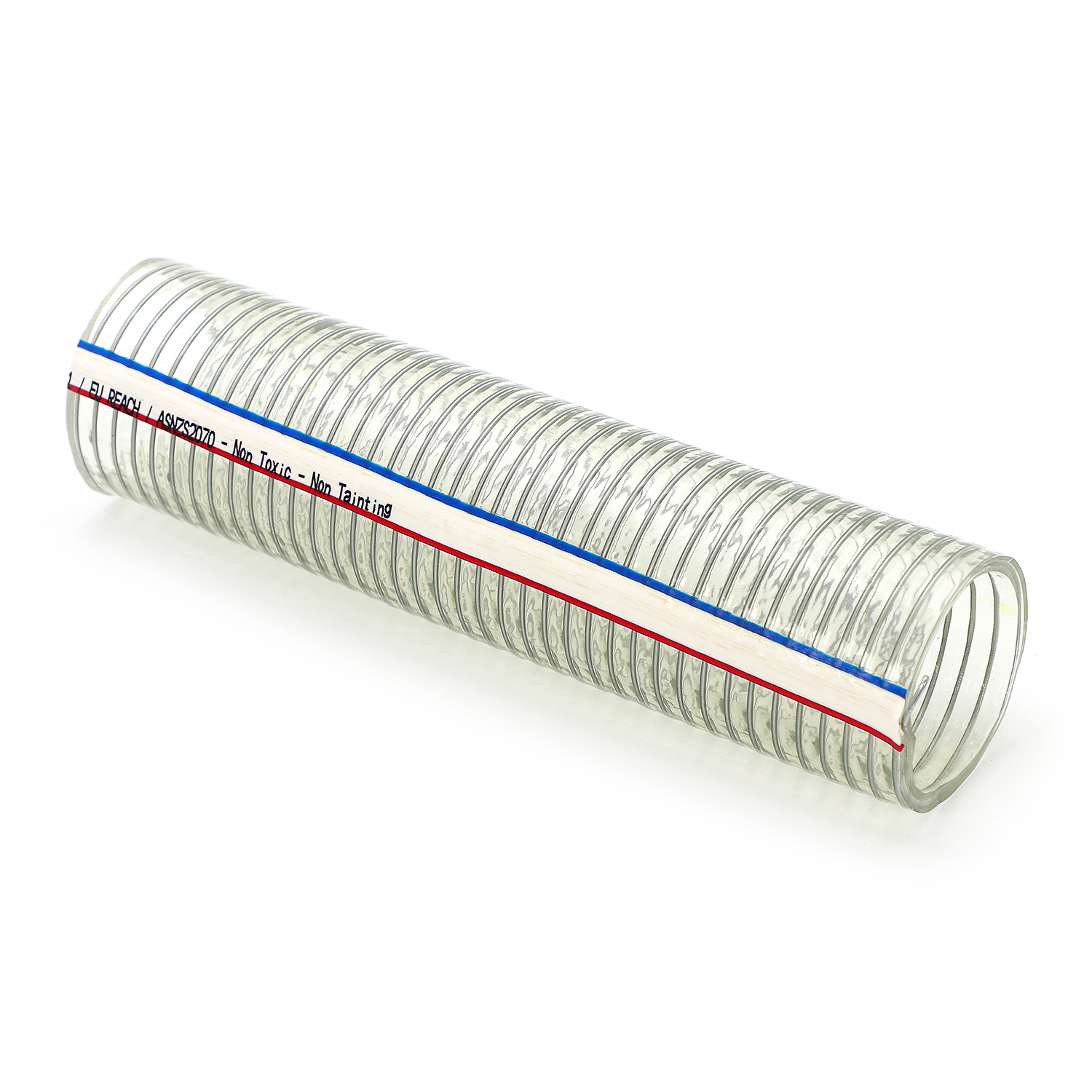
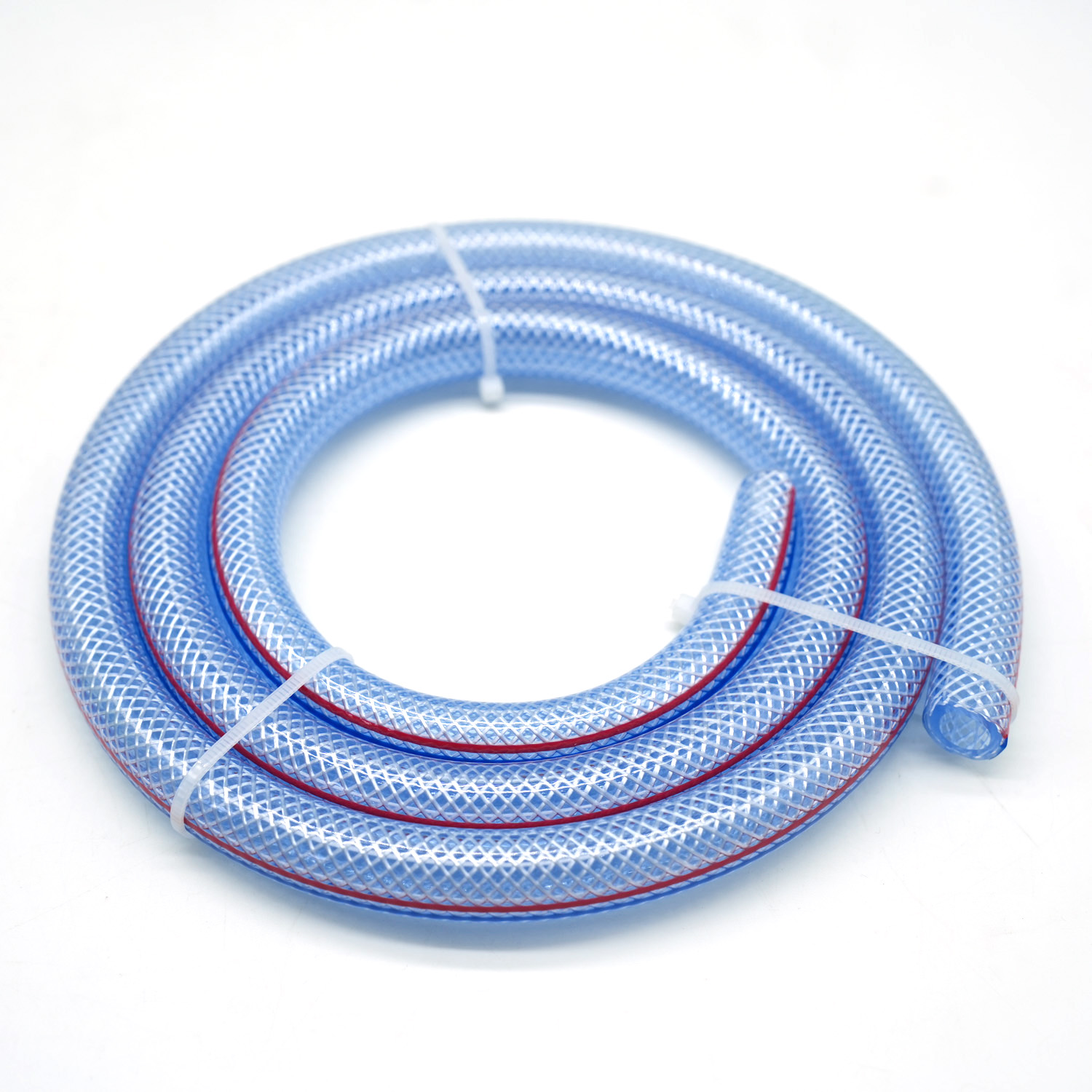
PVC steel wire hose uses a spiral steel wire embedded in the hose wall to help maintain its shape under suction. PVC fiber reinforced hose uses high-strength polyester fiber to reinforce the hose for fluid transfer applications that require flexibility and pressure resistance.
This guide compares their construction, performance, applications, and key specifications to help buyers choose the right hose.
Table of Contents
PVC steel wire hose contains a spiral steel wire embedded in its PVC wall. The wire supports the hose structure and helps reduce the risk of collapse under negative pressure.
PVC fiber reinforced hose contains high-tensile polyester fiber between its PVC tube and cover. The fiber reinforcement helps the hose withstand internal pressure while maintaining flexibility.
Feature | PVC Steel Wire Hose | PVC Fiber Reinforced Hose |
|---|---|---|
Reinforcement | Spiral steel wire | Polyester fiber |
Suction applications | Suitable when the model has the required vacuum rating | Use only when the model is specifically rated for the required suction conditions |
Pressure performance | Depends on diameter, wall construction, and model | Depends on diameter, braid construction, and model |
Flexibility | Flexible, but the wire affects bending | Generally easy to coil and handle |
Shape retention under suction | Steel wire helps resist collapse | Must be verified for the specific design |
Typical selection priority | Suction, shape retention, and transfer stability | Flexible routing and general fluid delivery |
Neither reinforcement type automatically guarantees suitability for every application. Always confirm the specifications of the exact hose size and model.
Working pressure is the pressure a hose is rated to handle during normal operation under specified conditions. Burst pressure is a test value indicating when the hose fails under pressure testing. It is not a safe operating pressure.
The working pressure of both PVC steel wire hose and PVC fiber reinforced hose varies with hose diameter, wall construction, and product design.
For example, GSD Rubber lists a working pressure range of 2–8 bar for its PVC steel wire hose, with different ratings for different sizes. Its PVC fiber reinforced hose datasheet also lists different working pressures by model and size.
Do not use general pressure ranges to select a hose. Instead, compare the working pressure for the exact diameter and model with the maximum pressure expected in your system.
Explore the PVC Steel Wire Hose specifications and PVC Fiber Reinforced Hose specifications before requesting a quotation.
Vacuum resistance is a key consideration when selecting a hose for pump inlets, suction lines, and other applications involving negative pressure.
The spiral steel wire in PVC steel wire hose helps the hose retain its shape when suction is applied. This makes it a practical option for applications that require anti-collapse support.
Standard PVC fiber reinforced hose is primarily selected for pressure delivery and flexible fluid transfer. Do not assume it can withstand vacuum simply because it has fiber reinforcement.
Before using either type for suction, confirm the manufacturer's vacuum rating, operating conditions, and minimum bend radius. A hose without a suitable vacuum rating may flatten, restrict flow, or become damaged.
PVC steel wire hose is worth considering when an application requires suction performance, shape retention, and visibility of the material moving through the hose.
Typical applications include:
Water pump suction and discharge
Industrial liquid transfer
Light oil transfer where material compatibility is confirmed
Powder and granule conveying where the hose specification permits
Transfer systems that require visual monitoring
The transparent PVC body allows operators to observe flow conditions. The spiral steel wire helps support the hose under suction.
View the GSD Rubber PVC Steel Wire Hose for available sizes and specifications.
PVC fiber reinforced hose is a practical option when flexibility and easy handling are important, and the application does not require unverified vacuum performance.
Typical applications include:
Water delivery in factories and farms
General-purpose fluid transfer
Building and utility applications
Flexible hose connections that require frequent handling
Other compatible fluid delivery applications within the specified pressure and temperature limits
PVC fiber reinforced hose is generally easy to coil and route. However, the exact pressure capacity, fluid compatibility, and operating limits must be checked for the selected model.
See the GSD Rubber PVC Fiber Reinforced Hose for product details.
Identify the normal operating pressure, maximum expected pressure, and whether the system operates under suction or negative pressure.
If suction is involved, request a verified vacuum rating for the specific hose model. Do not select a hose based only on its working or burst pressure.
PVC formulations and reinforcement materials may respond differently to different fluids and chemicals. Confirm compatibility with the exact fluid, concentration, and operating temperature.
Do not assume that a hose is suitable for every oil, solvent, or chemical simply because its main material is PVC.
Temperature affects the performance of PVC hose materials. GSD Rubber lists a working temperature range of -10°C to +65°C for both product types discussed in this guide.
The allowable pressure at the actual operating temperature should be confirmed with the supplier. Do not assume the hose can maintain the same pressure rating across its entire temperature range.
Consider the available routing space, hose movement, minimum bend radius, and frequency of handling.
Fiber reinforced hose may be preferable when easy coiling and handling are priorities. Steel wire hose may be more appropriate when the application requires additional support against collapse under suction.
Avoid bending either hose below its specified minimum bend radius or forcing it around sharp corners.
Compare quotations for the same hose diameter, length, pressure rating, temperature range, and other requirements.
Also consider service life under the intended conditions, replacement frequency, installation costs, and downtime risks. A lower purchase price does not necessarily mean a lower total cost.
Before purchasing PVC steel wire hose or PVC fiber reinforced hose, review the following specifications.
Specification | Why It Matters |
|---|---|
Inner and outer diameter | Ensures suitable flow capacity and connection fit |
Working pressure | Confirms suitability for normal operating conditions |
Burst pressure | Provides a test value, not a working limit |
Vacuum rating | Determines suitability for suction applications |
Working temperature | Helps verify suitability for the fluid and environment |
Minimum bend radius | Helps prevent kinking and excessive bending stress |
Reinforcement material | Identifies the hose's structural design |
Fluid compatibility | Helps prevent material deterioration |
Length and packaging | Supports installation planning and procurement |
Test reports and quality records | Helps verify the supplier's stated specifications |
Ask the supplier for a current datasheet for the exact model and size. Where necessary, request test reports and written confirmation of pressure, vacuum, and temperature suitability.
For additional product information, visit the GSD Rubber PVC Hose range or the Technical Support page.
A reliable purchasing decision requires more than comparing product descriptions and unit prices.
When evaluating suppliers, consider the following:
Technical documentation: Check whether datasheets specify the required dimensions, working pressure, temperature range, and other application limits.
Product samples: Where practical, compare dimensions, flexibility, surface quality, and reinforcement consistency.
Testing and quality control: Ask which tests apply to the product and whether supporting records are available.
Customization: Confirm available sizes, colors, lengths, printing, packaging, and other requirements.
Order and delivery terms: Check minimum order quantities, lead times, packaging, and shipping arrangements.
Technical support: Confirm whether the supplier can help assess application requirements before an order is placed.
Provide the same technical requirements to each supplier so that quotations can be compared fairly.
PVC steel wire hose and PVC fiber reinforced hose serve different needs. Steel wire reinforcement helps maintain hose shape under suction, while polyester fiber reinforcement supports flexible fluid delivery.
The right choice depends on the actual operating pressure, vacuum requirements, fluid compatibility, temperature, installation space, and handling conditions. Always verify the specifications of the exact hose model instead of relying on general performance claims.
Explore GSD Rubber's PVC Steel Wire Hose and PVC Fiber Reinforced Hose to compare product specifications. For application-specific requirements, contact GSD Rubber.
PVC steel wire hose uses spiral steel wire to support the hose structure under suction. PVC fiber reinforced hose uses polyester fiber reinforcement and is generally suited to flexible fluid delivery applications.
PVC steel wire hose is often a suitable choice because its spiral wire helps resist collapse. Confirm the vacuum rating of the exact model before use.
No. Working pressure depends on the hose diameter, construction, and model. Compare the rated working pressure in the manufacturer's datasheet.
It depends on the oil type, PVC formulation, temperature, and hose specifications. Confirm fluid compatibility with the manufacturer before use.
Check the diameter, working pressure, vacuum rating if applicable, temperature range, fluid compatibility, minimum bend radius, length, and required test documentation.