Views: 0 Author: Site Editor Publish Time: 2025-12-22 Origin: Site
Wire-reinforced rubber hoses are essential for hydraulic systems. Their design allows them to withstand high pressures and harsh environments. These hoses combine strength and flexibility, making them ideal for demanding applications. In this article, we will explore the types, benefits, and uses of wire-reinforced hydraulic hoses. By the end, you will know how to choose the best hose for your system’s needs.
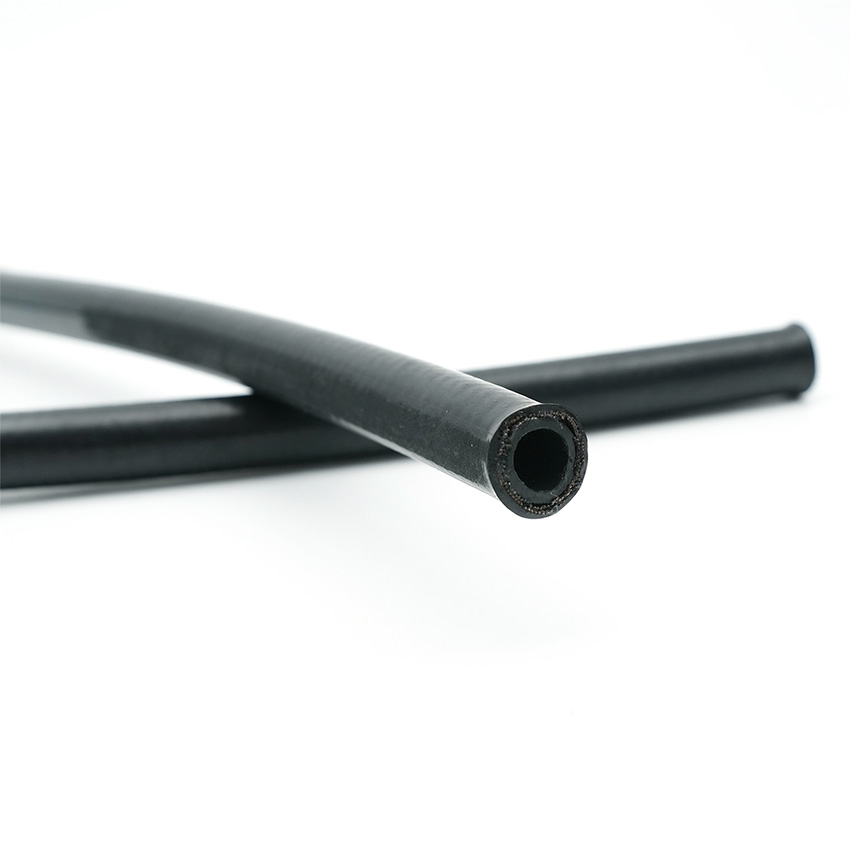
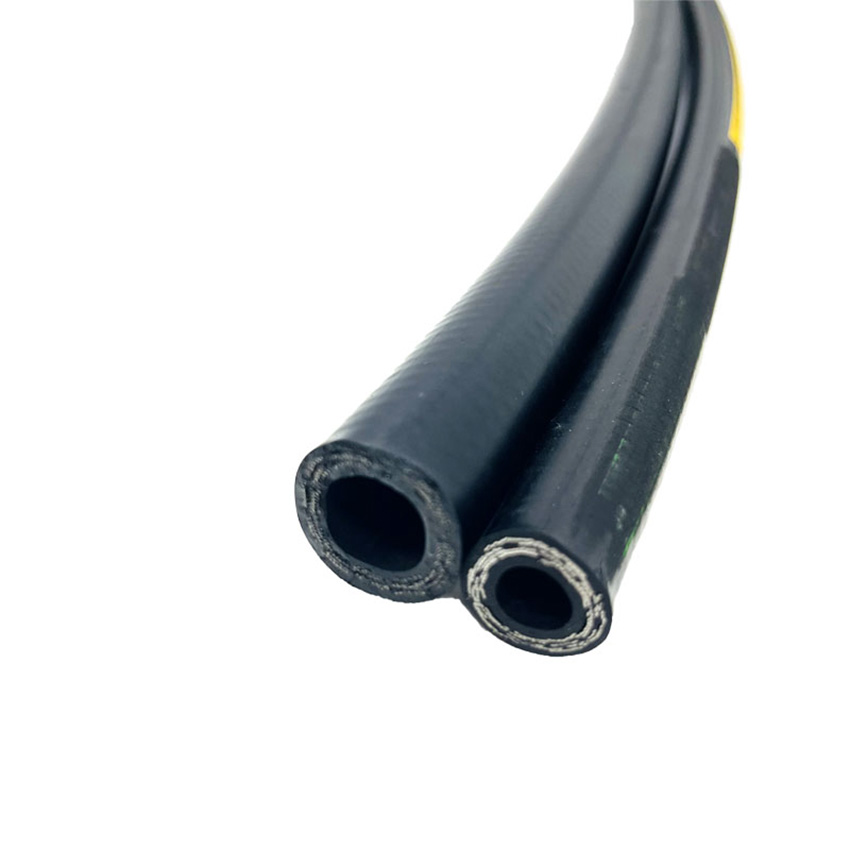
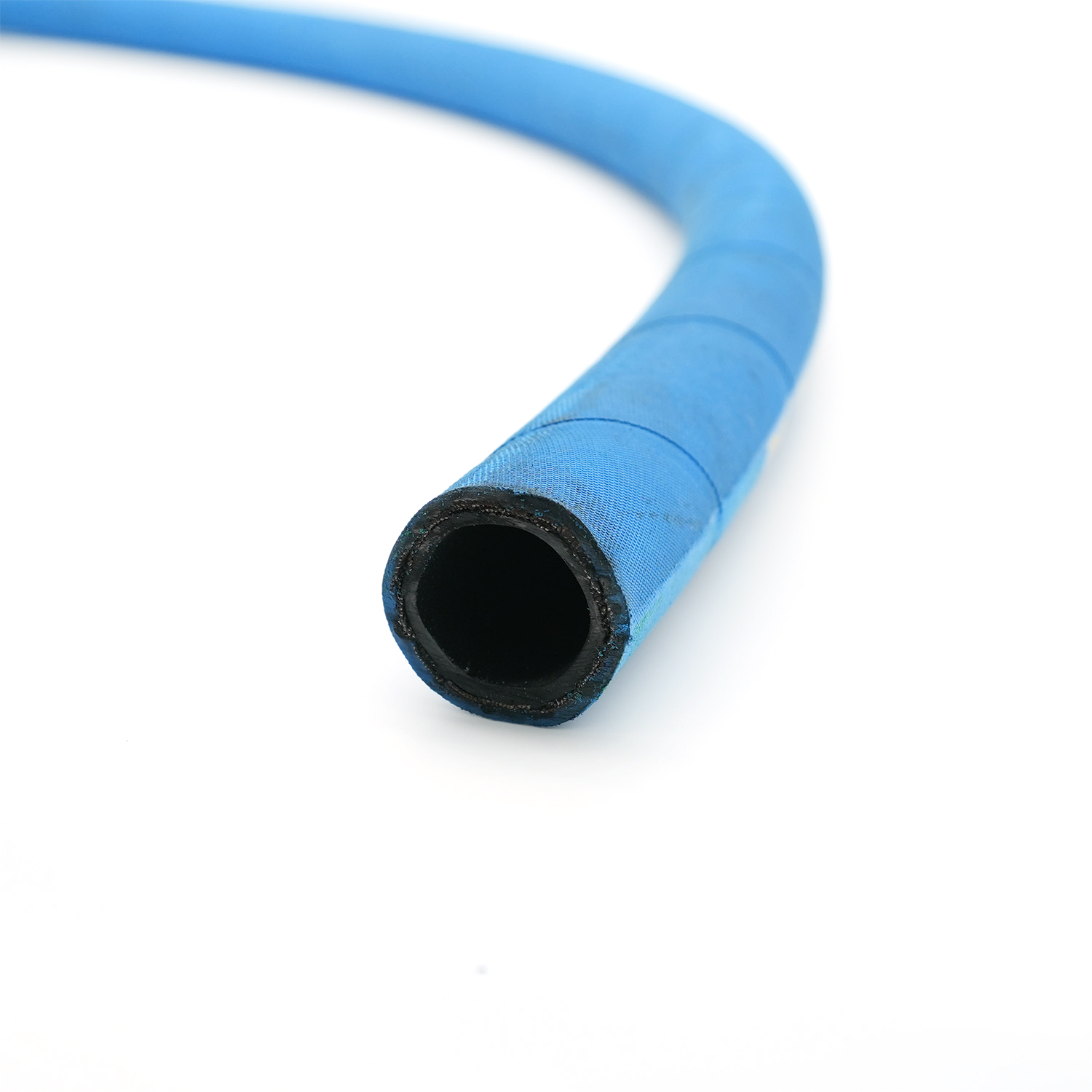
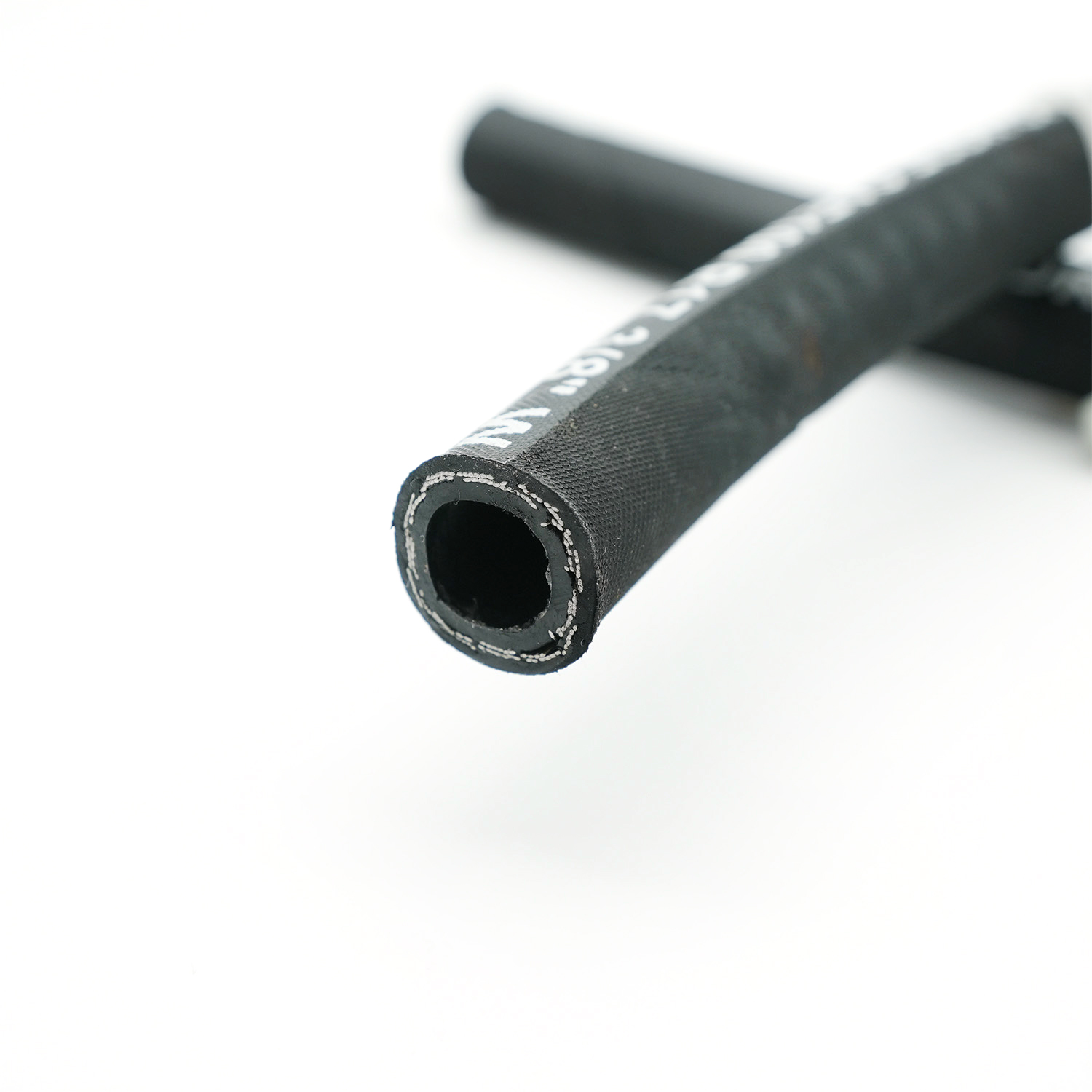
A wire reinforced rubber hose consists of three primary components:
Inner Tube: This is the core of the hose, responsible for transporting the fluid. Made from synthetic rubber, the inner tube must be compatible with the specific fluid being transferred.
Wire Reinforcement Layer: The defining feature of these hoses, the wire layer can be braided, spiral, or helical. It adds strength to the hose and allows it to withstand high internal pressures without expanding or rupturing.
Outer Cover: The protective outer cover shields the hose from external damage caused by abrasion, UV radiation, and environmental factors like chemicals and extreme temperatures.
Wire reinforced hoses are engineered to provide strength, flexibility, and resistance to harsh conditions, making them essential in industries like manufacturing, agriculture, construction, and more.
The wire-reinforced hydraulic hose is made up of several key components that work together to ensure durability, flexibility, and pressure resistance. Below is a table that breaks down the essential parts of the hose, their materials, and their functions in a simple, easy-to-understand format.
| Component | Material | Function |
|---|---|---|
| Inner Tube | Synthetic rubber (e.g., nitrile rubber, EPDM) | Resists chemical degradation, corrosion, and temperature fluctuations. Suitable for hydraulic fluids. |
| Wire Reinforcement Layer | Braided, spiral, or helical wire (steel) | Provides strength and pressure resistance. Braided wire offers flexibility, spiral wire offers superior strength, and helical wire offers dynamic flexibility. |
| Outer Cover | Synthetic rubber or polyurethane | Protects against abrasion, chemicals, UV exposure, and extreme temperatures. May include fire resistance or high-temperature protection. |
These are the most common wire-reinforced hoses used in hydraulic systems, designed to transmit high-pressure fluids safely and efficiently.
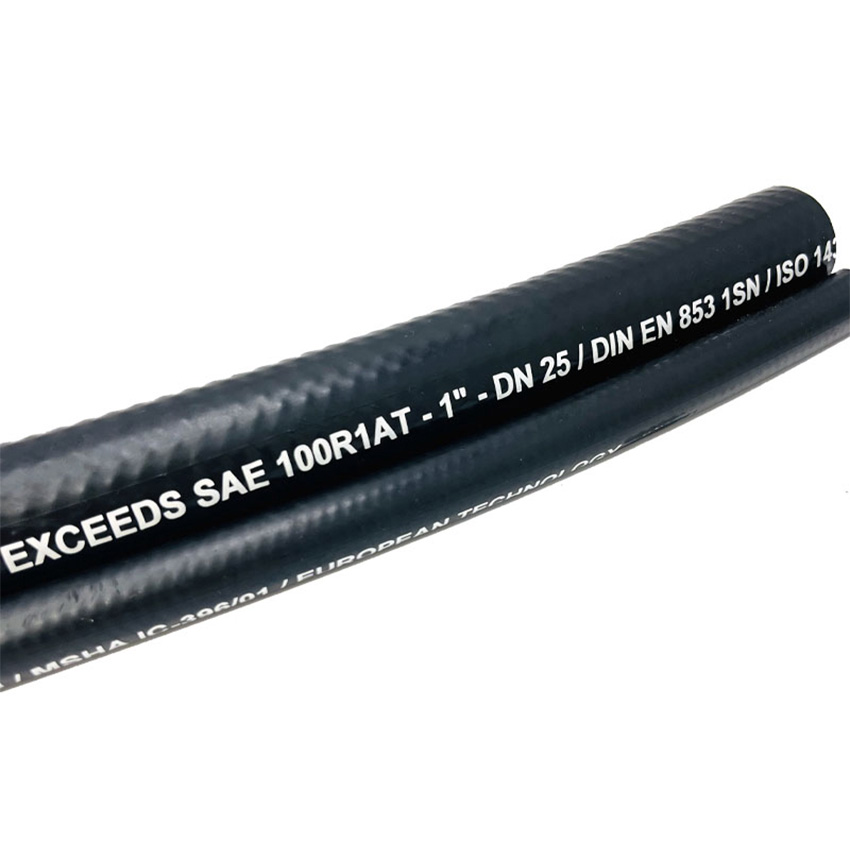
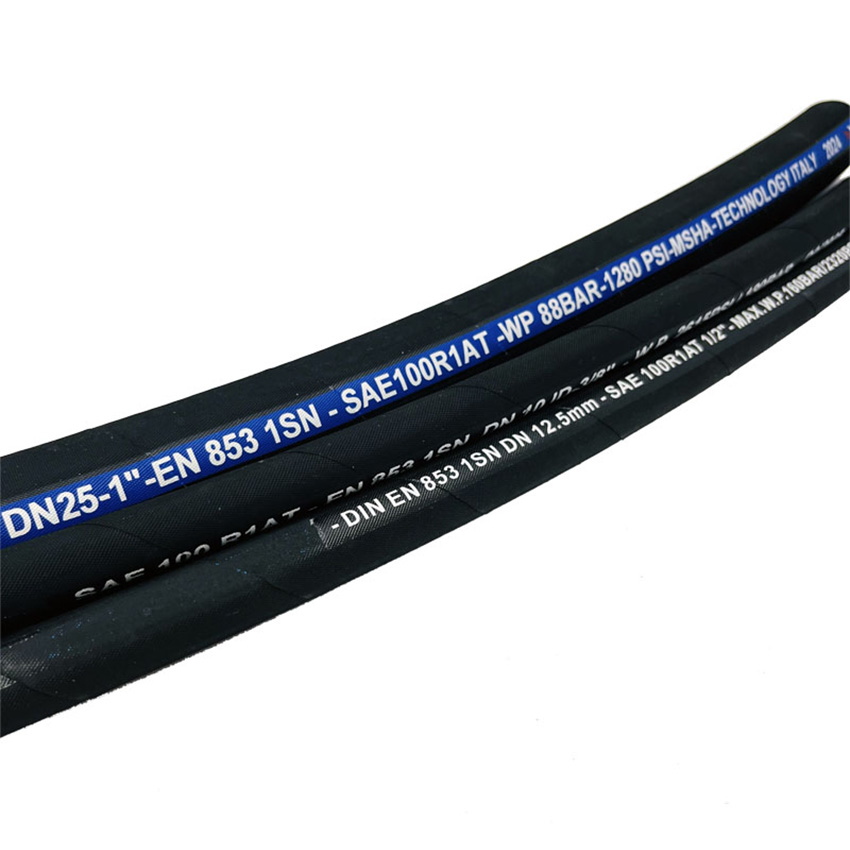
Standards: SAE 100R1AT / EN 853 1SN
Reinforcement: One layer of high-tensile steel wire braid
Pressure Level: Medium pressure
Key Advantages:
Good flexibility
Cost-effective
Widely compatible with standard hydraulic fittings
Typical Applications:
Agricultural machinery
Construction equipment
General industrial hydraulics
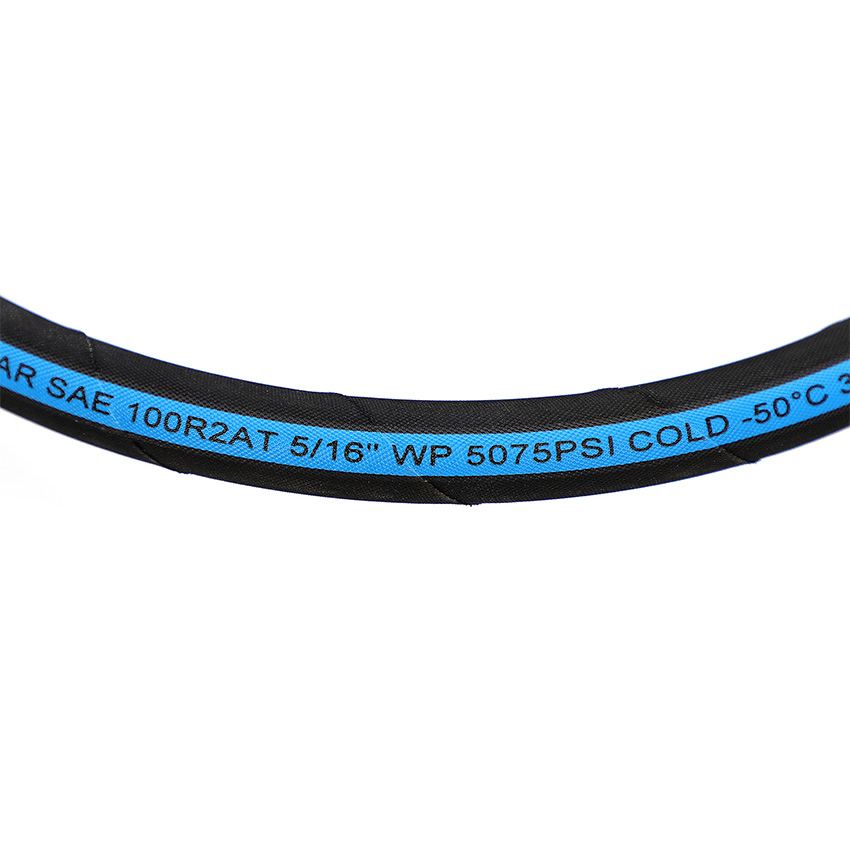
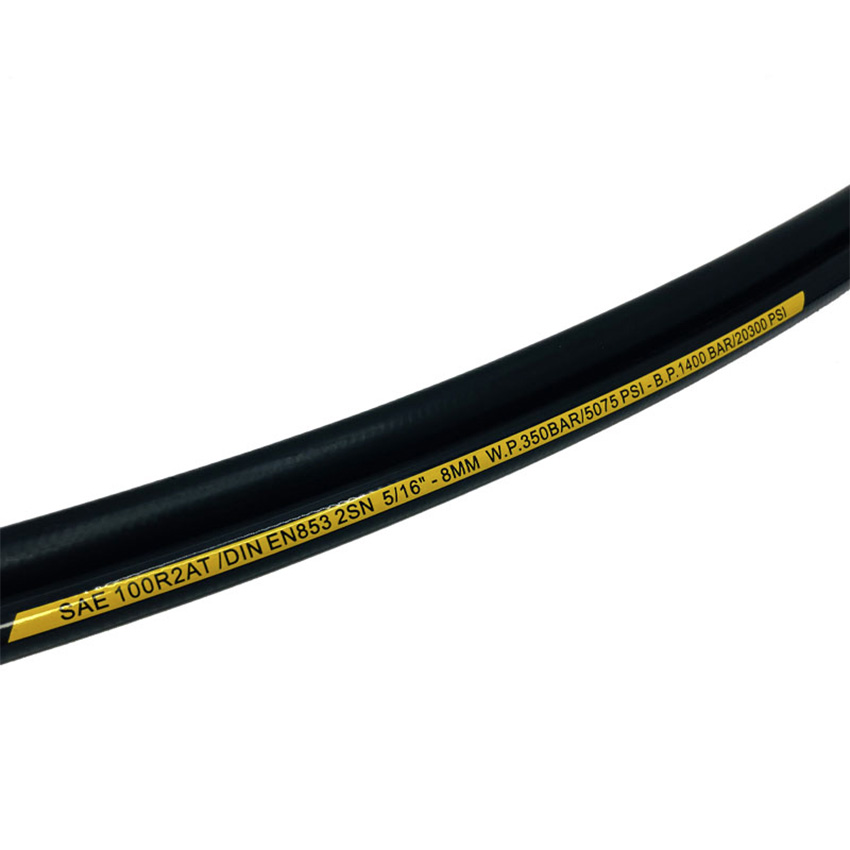
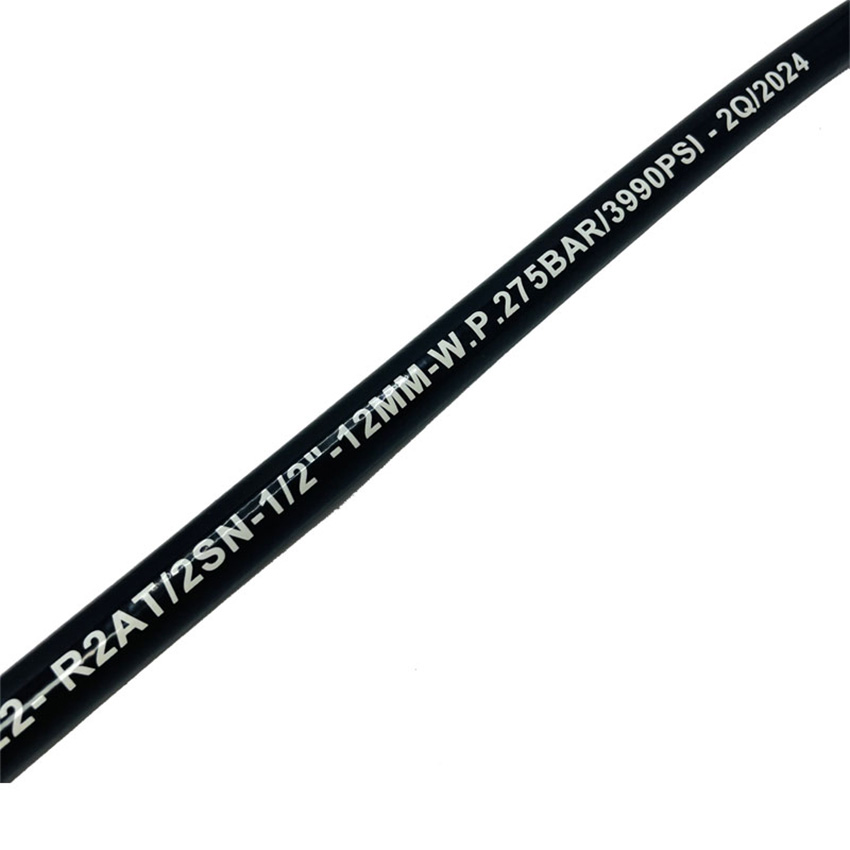
Standards: SAE 100R2AT / EN 853 2SN
Reinforcement: Two layers of steel wire braid
Pressure Level: Higher pressure than single-braid hoses
Key Advantages:
Enhanced pressure resistance
Improved safety margin
Typical Applications:
Excavators
Forklifts
High-load hydraulic systems
Standards: EN 857 1SC / 2SC
Reinforcement: One or two wire braids with reduced outer diameter
Key Advantages:
Smaller bend radius
Ideal for tight installation spaces
Typical Applications:
Mobile hydraulics
Compact machinery
Equipment with space constraints
Spiral wire hoses are engineered for extreme pressure and pulsating hydraulic systems.
Reinforcement: Multiple layers of spiraled steel wire
Pressure Level: Very high to ultra-high pressure
Key Advantages:
Superior impulse resistance
Excellent performance under pressure fluctuations
Typical Applications:
Mining equipment
Oil & gas drilling systems
Heavy-duty industrial presses
Compared to braided hoses, spiral wire hoses offer higher pressure ratings but slightly reduced flexibility.
These hoses focus on abrasion resistance and structural strength, rather than extreme hydraulic pressure.
Inner Tube: Natural rubber or SBR
Outer Cover: Thick SBR or Neoprene
Reinforcement: Steel wire braid or helix
Typical Applications:
Concrete pumping
Sand, gravel, cement, and dry bulk transfer
Reinforcement: Steel wire braid or helix
Key Advantages:
Anti-collapse under vacuum
Rugged construction for outdoor use
Typical Applications:
Mining sites
Construction air supply
Industrial water discharge
Designed for specific media compatibility and safety requirements.
Inner Tube Material: Nitrile rubber (NBR)
Key Advantages:
Excellent resistance to petroleum-based fluids
Reduced permeation
Typical Applications:
Fuel transfer systems
Oil delivery lines
Refineries and chemical plants

| Application Need | Recommended Hose Type |
|---|---|
| Medium pressure hydraulics | SAE 100R1AT / EN 853 1SN |
| High pressure hydraulics | SAE 100R2AT / EN 853 2SN |
| Tight installation space | EN 857 1SC / 2SC |
| Extreme pressure & impulse | Spiral wire reinforced hose |
| Concrete or abrasive materials | Bulk material handling hose |
| Oil & fuel transfer | NBR wire reinforced hose |
Wire reinforcement significantly improves the pressure resistance of hydraulic hoses. The wire layers prevent the hose from expanding under pressure, ensuring that the hydraulic system operates efficiently and safely. This makes wire reinforced hoses suitable for high-pressure systems that require reliability and durability.
While wire reinforcement enhances the hose's strength, it also maintains the necessary flexibility for complex hydraulic systems. Braided wire hoses, for example, offer excellent flexibility, making them ideal for systems that require frequent bending or tight bend radii. Spiral and helical reinforcement types, while offering superior strength, allow for dynamic flexibility in more demanding applications.
The outer cover of a wire-reinforced hose protects it from environmental factors such as abrasion, chemicals, UV exposure, and extreme temperatures. The wire reinforcement also provides additional protection against wear, ensuring that the hose can withstand harsh industrial conditions for longer periods.
Wire-reinforced hoses are widely used in the construction industry, especially in heavy machinery like excavators, cranes, and loaders. These hoses are designed to handle the high pressures and extreme conditions these machines encounter, ensuring reliable fluid transfer even in harsh environments.
In manufacturing environments, hydraulic systems are often required to power presses, lifts, and conveyor systems. Wire reinforced hoses are essential in these applications, providing the durability and strength needed to maintain consistent performance over long periods.
Agricultural machinery, such as tractors, harvesters, and sprayers, relies on hydraulic systems powered by wire-reinforced hoses. These hoses are durable enough to handle the rough conditions of agricultural environments, including exposure to dirt, moisture, and chemicals.
When choosing a hydraulic hose, it is essential to match the hose’s pressure rating with the system’s requirements. Wire-reinforced hoses are designed for systems that need to handle high or very high pressures. Choosing the correct type ensures that the hose can withstand the demands of the hydraulic system without failure.
Consider environmental factors such as abrasion, exposure to chemicals, or temperature extremes. Wire-reinforced hoses are ideal for these conditions due to their resistance to external damage and their ability to maintain performance under harsh environments.
Wire-reinforced hoses are highly flexible, making them ideal for complex system designs. Their ability to bend and flex allows for easy routing through tight spaces, minimizing the need for additional fittings. This not only reduces installation time and costs but also helps avoid potential leak points, leading to a more efficient and streamlined hydraulic system setup, especially in confined or intricate layouts.
Regular inspections are key to ensuring the longevity and performance of wire-reinforced hoses. Look for signs of wear, such as abrasion, leaks, and kinks. Additionally, regularly perform pressure tests to ensure the hose meets the required performance specifications.
Proper installation is essential for extending the lifespan of wire-reinforced hoses. Ensure the correct bend radius is followed, avoid twisting the hose, and secure it with appropriate clamps or ties. This will minimize the risk of damage and enhance the hose’s performance.
While the lifespan of a hose varies depending on the application, high-pressure hoses typically need to be replaced every 1-2 years in heavy-duty environments. Regular inspection can help identify early signs of wear, allowing for timely replacements before hose failure occurs.
Wire-reinforced hydraulic hoses are vital for ensuring the efficiency and safety of hydraulic systems across various industries. Their design, which combines strength and flexibility, makes them ideal for high-pressure applications and harsh environmental conditions. By selecting the right hose and maintaining it properly, you can ensure that your hydraulic systems perform reliably and efficiently. For industries needing durable hydraulic hoses, Qingdao Grantseed Rubber Co., Ltd. offers high-quality wire-reinforced hoses designed to withstand extreme conditions. Their products ensure long-lasting performance, providing value through durability and superior performance.
A: A wire-reinforced hydraulic hose is a hose that includes layers of steel wire reinforcement between its inner tube and outer cover. This construction provides strength, flexibility, and resistance to high pressures, making it suitable for hydraulic systems.
A: Wire-reinforced hydraulic hoses offer superior pressure resistance and durability. Their flexibility allows for easy routing through tight spaces, reducing the need for additional fittings and improving system efficiency.
A: The main types include braided, spiral, and helical wire-reinforced hoses. Each type offers different levels of pressure resistance and flexibility, making them suitable for various hydraulic applications.
A: Regularly inspect for wear, leaks, or kinks. Ensure proper installation, avoiding twists or sharp bends. Replace the hose if any significant damage is detected, especially in high-pressure systems.
A: Yes, wire-reinforced hydraulic hoses are designed to withstand a range of temperatures, with some hoses offering heat resistance. However, selecting the right hose material for specific temperature ranges is important.