Views: 0 Author: Site Editor Publish Time: 2026-10-29 Origin: Site
Hydraulic hose bend radius is an important specification when selecting and installing a hydraulic hose. It determines how tightly a hose can bend without exceeding its design limits. If a hose is routed through a space that is too narrow, it may kink, experience excessive stress, or wear prematurely.
Understanding minimum bend radius helps engineers, equipment manufacturers, and purchasing teams choose suitable hoses for their systems. This guide explains what bend radius means, why it matters, and how to check it during hose selection and installation.
Table of Contents
The bend radius describes the radius of a curved hose section. The minimum bend radius is the smallest radius allowed for a hose under the conditions defined by its manufacturer.
A hose bent below this limit may experience deformation or excessive stress in its tube and reinforcement layers. This can affect fluid flow and hose performance.
Manufacturers usually list the minimum bend radius in millimeters or inches on the product datasheet. Always check the specification for the exact hose model and size instead of estimating it from appearance.
Bending a hose more tightly than the specified minimum radius can deform its structure. Depending on the hose design and installation conditions, this may restrict flow or place extra stress on the reinforcement.
Repeated movement in a tight bend can also contribute to fatigue. If the hose rubs against nearby components, abrasion may damage its outer cover. These risks make bend radius an important factor in system reliability and maintenance planning.
A hose with a suitable minimum bend radius is easier to route through the available installation space. This matters in compact machinery, where hoses must pass around frames, cylinders, valves, and other components.
For installations with limited clearance, compare the bend radius of different hose models before selecting one. For example, GSD Rubber's SAE 100R17 hydraulic hose is described on the manufacturer's website as suitable for some applications with compact installation spaces.
Incorrect routing can contribute to premature hose wear, leakage, unplanned replacement, and equipment downtime. Checking bend radius during design and installation helps reduce avoidable maintenance risks.
However, bend radius is only one part of hose selection. Working pressure, operating temperature, fluid compatibility, hose dimensions, fittings, and machine movement must also match the application.
Minimum bend radius varies by hose model and nominal size. Different reinforcement structures and hose materials can produce different bending characteristics. Do not assume that all braided hoses or all spiral-reinforced hoses follow the same bend-radius ratio.
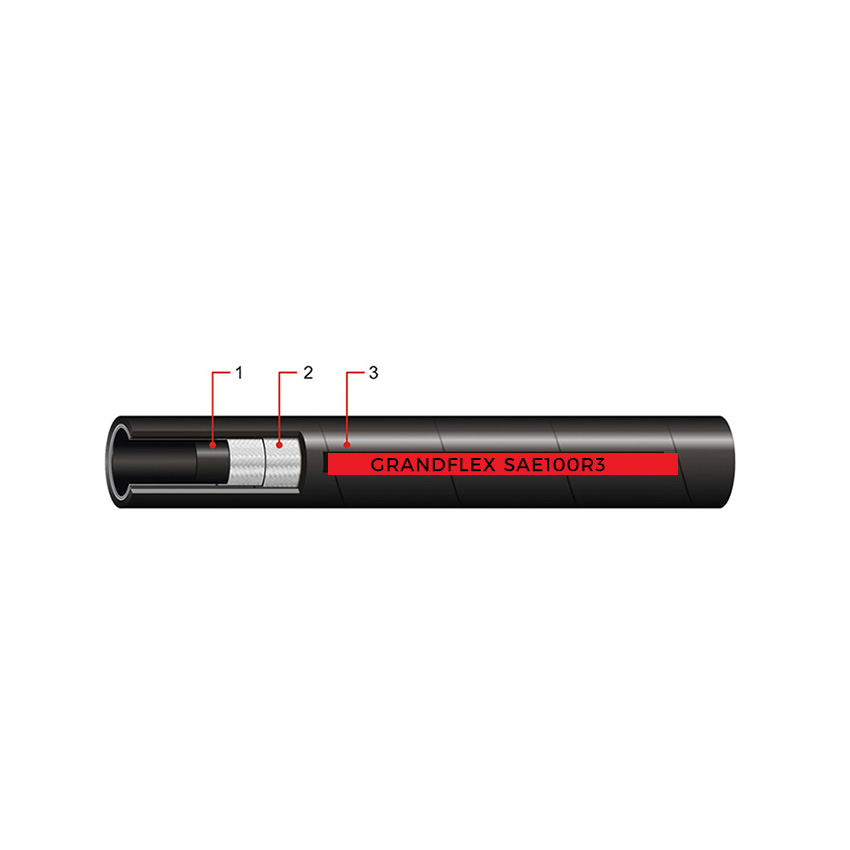
For example, GSD Rubber's SAE 100R3 hydraulic hose provides a size-by-size bending-radius table. Use the manufacturer's listed value for the selected size rather than relying on a general rule.
A hose installed in a fixed position may experience different stresses from one that moves continuously with a cylinder or machine component. Dynamic applications require careful consideration of movement, routing, and the manufacturer's installation instructions.
Also check whether the hose may twist, rub against equipment, or be exposed to vibration. These factors can affect service life even when the static bend radius appears acceptable.
The available space, connection direction, and fitting dimensions can affect the routing path. Plan the hose route before installation, leaving sufficient clearance from sharp edges, hot surfaces, and moving parts.
If the specified bend radius cannot be maintained, consider a suitable hose design, a different fitting arrangement, or a revised route. Never force a hose into a tighter curve just to make it fit.
Measure the available space and identify the positions of ports, fittings, and moving components. Compare the planned route with the manufacturer's minimum bend radius and installation requirements.
Avoid sharp turns immediately next to fittings unless the manufacturer permits that arrangement. Make sure the hose has enough length to accommodate normal equipment movement without pulling tight or forming an excessively small loop.
A hose should not be twisted to align its fittings. Twisting can add stress to the reinforcement and may contribute to premature failure, particularly when combined with pressure cycles or movement.
Position the hose naturally during assembly. If fitting alignment is difficult, review the fitting orientation or assembly design instead of forcing the hose into position.
Keep hoses away from sharp edges and surfaces that may rub against them. Use suitable clamps, guards, or protective sleeves where the installation environment creates a risk of abrasion or mechanical damage.
Support the hose appropriately without clamping it so tightly that the cover or structure is damaged. Recheck the route after installation and throughout the equipment's service life.
Before purchasing or installing a hose, check the following specifications:
Minimum bend radius: Confirm the value for the exact hose model and size.
Inside diameter: Make sure the hose size meets the system's flow requirements.
Working pressure: Select a hose rated for the system's operating conditions.
Temperature range: Verify suitability for the fluid and surrounding environment.
Fluid compatibility: Check that the tube and cover materials suit the hydraulic fluid.
Fittings and movement: Confirm that the complete assembly fits the equipment and allows the required movement.
The GSD Rubber hydraulic hose product range includes multiple hose types. Compare the technical specifications of the relevant models before making a selection.
Inspect hydraulic hoses regularly according to the equipment manufacturer's maintenance schedule and the actual operating environment. Pay particular attention to:
Kinks, flattening, or visible deformation.
Cracks, cuts, or abrasion on the outer cover.
Leaks, damaged fittings, or signs of movement at connections.
Contact with sharp edges, hot surfaces, or moving components.
Changes in hose routing that may create a tighter bend or additional tension.
If a hose shows damage or a suspected pressure-related fault, take the equipment out of service and follow the manufacturer's safety procedures. Depressurize the system before inspection or maintenance. Never use your hand to search for a high-pressure hydraulic leak.
Hydraulic hose bend radius affects hose routing, installation, and long-term reliability. Selecting a hose with the correct minimum bend radius helps prevent excessive bending stress and reduces the risk of avoidable damage.
Always use the manufacturer's datasheet for the exact hose model and size. Check bend radius alongside pressure, temperature, fluid compatibility, fittings, and expected movement. Proper routing, secure support, and regular inspection can help maintain a reliable hydraulic system.
For help identifying a suitable hose, review the GSD Rubber hydraulic hose range or contact the GSD Rubber teamwith your application requirements.
It is the smallest bend radius permitted by the hose manufacturer under the specified conditions. Check the datasheet for the exact model and size.
A bend below the specified minimum radius may deform the hose, restrict fluid flow, and increase stress on its structure. It can also contribute to premature wear or failure.
Yes. Minimum bend radius can vary by hose size, construction, and model. Use the manufacturer's technical table rather than a general diameter ratio.
Avoid twisting the hose to align its fittings. Twisting can place additional stress on the reinforcement and may shorten service life.
Check the manufacturer's datasheet or product specification table for the exact hose model and size. Also verify pressure, temperature, fluid compatibility, and fitting requirements.