
Views: 0 Author: Site Editor Publish Time: 2025-10-29 Origin: Site
Choosing the right sandblast hose is essential for maintaining efficiency and safety in tough environments like shipyards. A poorly selected hose can result in delays, risks, and inefficiencies that affect your operations.
In this article, we will explore how to select the right hose based on size, material, and durability to ensure high performance in demanding industrial applications.
When selecting a sandblast hose, the size of the hose should align with the blast nozzle to ensure optimal air pressure and flow. If the hose is too small, it can lead to excessive pressure loss, affecting the blasting speed and overall effectiveness of the operation. A well-sized hose will maintain consistent pressure at the nozzle, ensuring efficient sandblasting.Choosing the wrong hose size can result in less abrasive material being delivered to the surface, which decreases the quality and speed of the job. Too large a hose might result in unnecessary bulk, while too small a hose may cause safety issues and operational inefficiency.
The sandblast hose is made up of three primary layers: the inner tube, reinforcement layers, and the outer cover. These layers work together to ensure the hose withstands high pressure and abrasive materials. The inner tube is typically made from rubber or polyurethane to resist abrasion from the abrasive materials like sand or steel grit. Reinforcement layers, often made from synthetic fabric or steel, provide structural integrity and allow the hose to handle high internal pressures without bursting.For heavy-duty applications, such as shipyards, choosing a sandblast hose with durable reinforcement layers, such as 4-ply fabric, is critical for maintaining performance over time. Hoses made with multiple layers offer more strength and durability, making them ideal for demanding environments.
Shipyards and industrial applications demand sandblast hoses that can withstand heavy abrasion. As the hose comes in direct contact with abrasive particles, it’s essential to select a hose with superior wear resistance. This extends the life of the hose and reduces downtime caused by frequent replacements. In heavy-duty environments, abrasion is inevitable, and selecting a hose with high wear resistance is vital to ensuring consistent performance.Additionally, depending on the materials being blasted (such as steel, concrete, or stone), the abrasion levels can vary, which directly impacts the hose's wear rate. Choosing a hose with enhanced abrasion resistance ensures fewer replacements and keeps operational costs down.
While strength is crucial for handling high pressure, flexibility allows for easy maneuverability in tight spaces. Finding the right balance between flexibility and strength ensures that the sandblast hose can withstand the demands of both movement and high-pressure conditions in environments like shipyards. Too much flexibility can compromise the hose’s durability, while insufficient flexibility can make it difficult to work in confined spaces.Flexibility is especially important in jobs where the operator needs to move the hose quickly or manipulate it around obstacles. It ensures smoother handling and reduces the risk of operator fatigue, making the job more efficient.
Sandblast hoses are classified into light-duty and heavy-duty options based on the construction and the environments they are used in. Light-duty hoses are typically used for smaller, less demanding operations, such as cleaning machinery or small surfaces. In contrast, heavy-duty hoses are designed for high-pressure applications in industrial environments, like shipyards, where durability and performance under stress are critical.Heavy-duty hoses are reinforced to handle higher pressures, greater abrasions, and longer durations of use, making them ideal for shipyards and other heavy-duty applications. They are built to withstand intense wear and ensure safety during high-intensity operations.
The reinforcement layers in a sandblast hose determine its strength and ability to handle high pressure. A 2-ply hose is suitable for general industrial use, while a 4-ply hose is ideal for heavy-duty applications where higher pressure and longer hose lengths are required. The additional layers provide increased durability and resistance to abrasions, which is essential in environments like shipyards, where hoses experience constant wear.The number of plies in the reinforcement layer directly correlates with the hose’s ability to withstand pressure. More plies enhance the hose's resistance to bursting under high-pressure conditions, making it more suitable for industrial environments with demanding sandblasting tasks.
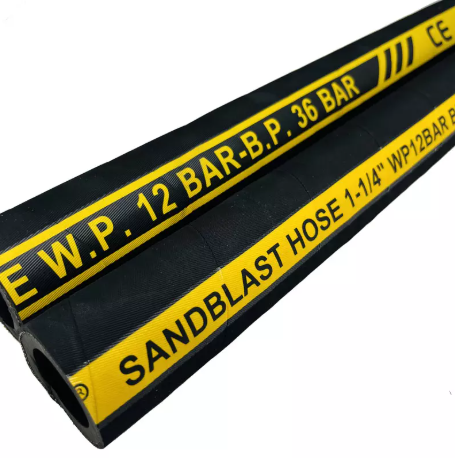
When choosing a sandblast hose, the hose size should be proportional to the nozzle size. The key factor is maintaining adequate pressure at the nozzle, which is essential for effective blasting. As a general rule, the internal diameter (ID) of the hose should be three to four times the size of the nozzle orifice to ensure a consistent flow of abrasive material. This ratio minimizes pressure loss and optimizes performance.Using the correct hose size ensures that the abrasive material flows efficiently, providing consistent pressure and better overall blasting quality. Incorrectly sized hoses can result in inefficient operations, reducing productivity and increasing costs.
Tip: For optimal performance, the internal diameter of the sandblast hose should be three times the nozzle size.
The length of the sandblast hose can affect pressure loss during operation. Longer hoses result in more resistance, causing a drop in pressure and reducing the effectiveness of the blasting process. For large-scale projects like shipyards, consider the total length of the hose required and choose a larger diameter to minimize pressure loss. Longer hoses create more friction, resulting in a significant decrease in air pressure.For optimal efficiency, keep hose lengths as short as possible without compromising accessibility. This helps to minimize pressure loss and maximize blasting efficiency, ensuring a consistent flow of abrasives.
Nozzle Size (inches) | Minimum Hose Internal Diameter (inches) | CFM at 100 PSI | CFM at 150 PSI |
#4 | 1/2 | 103 | 185 |
#5 | 5/8 | 158 | 229 |
#6 | 3/4 | 229 | 330 |
#7 | 7/8 | 312 | 451 |
#8 | 1 | 407 | 586 |
Regular maintenance and inspections of sandblast hoses are vital to ensure safety and efficiency. Look for signs of wear, cracks, bulges, or any damage that could lead to hose failure. Inspections should be conducted before every use to ensure that the hose is in optimal condition for high-pressure applications.Proper maintenance involves checking the hose for damage caused by abrasion, heat, or chemicals. Regular inspections help identify issues early, preventing safety hazards and ensuring the hose performs as expected.
Using safety cables is a key safety measure in sandblast hose operations. These cables secure the hose to the equipment, preventing it from accidentally whipping around and causing injuries. The safety cable should be as straight as possible to reduce the movement of the hose, ensuring it remains in a safe position during operation.By securing the hose, safety cables prevent sudden hose movements, which can pose serious safety risks, especially in high-pressure environments like shipyards.
Shipyard conditions are typically harsh, with exposure to chemicals, weather elements, and rough surfaces. The sandblast hose selected for such environments must be resistant to these elements, ensuring that it remains functional and safe throughout the project. Additionally, hoses used in shipyards must be flexible enough to allow for movement but strong enough to handle the abrasion from sand and other blasting materials.Hoses in shipyards are constantly subjected to intense pressure, abrasive materials, and environmental factors like temperature fluctuations, making it essential to select hoses that can withstand these challenges.
For heavy-duty applications in industries like construction, mining, and shipbuilding, a sandblast hose must handle extreme pressures and abrasions. Industrial environments demand hoses that provide high-performance levels under constant use, ensuring that operations run smoothly without disruptions. These hoses need to resist wear, handle high volumes of abrasive material, and endure the demanding conditions of industrial work.
Tip: For industrial sandblasting, choose a heavy-duty sandblast hose with multiple reinforcement layers and superior abrasion resistance.
To ensure the longevity and effectiveness of your sandblast hose, regular cleaning and inspections are essential. Before each use, visually inspect the hose for cracks or signs of damage. Cleaning the hose after each use can help prevent abrasive material buildup and reduce the likelihood of wear.
Proper storage and handling can significantly extend the life of your sandblast hose. Avoid leaving hoses in direct sunlight or exposing them to harsh chemicals when not in use. When handling the hose during operations, ensure that it’s not twisted or subjected to unnecessary stress, which can lead to premature damage.
Choosing the right sandblast hose for shipyards and heavy-duty applications is crucial for ensuring high efficiency and safety. Factors like hose size, material durability, and reinforcement options play a key role in optimizing sandblasting operations. Proper maintenance and sizing are essential to prevent costly failures and boost productivity.
Qingdao Grantseed Rubber Co., Ltd offers a range of high-quality sandblast hoses designed for demanding industrial environments. Their hoses provide enhanced durability, abrasion resistance, and high-pressure performance, ensuring long-lasting reliability and safety in shipyards and other heavy-duty applications.
A: A sandblast hose is a specialized hose used in abrasive blasting to transport air and abrasive material. It is essential for shipyards to ensure safe, efficient, and high-pressure sandblasting operations.
A: When choosing a sandblast hose, consider the hose size, material durability, reinforcement layers, and pressure capacity to match the specific needs of your project.
A: A 4-ply sandblast hose offers superior durability, abrasion resistance, and the ability to withstand higher pressures, making it ideal for heavy-duty and industrial applications like shipyards.
A: Sandblast hoses are exposed to harsh materials, making abrasion resistance critical. Hoses with high abrasion resistance last longer and reduce downtime due to frequent replacements.
A: The correct sandblast hose size ensures optimal pressure at the nozzle, minimizing friction and maximizing the flow of abrasive material for efficient blasting.


