

Views: 0 Author: Site Editor Publish Time: 2025-12-23 Origin: Site


Hydraulic hoses are crucial for the operation of many industrial systems. Have you ever wondered how heavy machinery moves so smoothly? It's all thanks to hydraulic hoses that transmit high-pressure fluid, powering various mechanical functions. In this article, we will explore the importance of hydraulic rubber hoses. You’ll learn about their types, features, and benefits, helping you select the best hoses for your systems.
| Layer | Material | Function | Properties |
|---|---|---|---|
| Inner Tube | Synthetic rubber or thermoplastic | Holds and transports hydraulic fluid safely. | Resistant to hydraulic fluid and chemicals. |
| Reinforcement Layer | Braided or spiral steel wires | Provides strength to withstand high-pressure environments. | Flexible, able to handle pressures up to 6,000 PSI. |
| Outer Cover | Neoprene, nitrile, polyethylene | Protects the hose from external damage like abrasion, UV rays, and chemicals. | Resists wear, UV radiation, chemicals, and abrasion. |
Hydraulic rubber hoses work by transmitting hydraulic fluid under pressure throughout the system. When the pump generates pressure, the hydraulic fluid is forced through the hose and reaches various components, like cylinders or motors, which then perform the desired mechanical movements, such as lifting, turning, or pressing.
As the fluid moves through the hose, it creates a force that is transmitted to the connected machinery. The flexibility of the hose allows it to bend and adjust to the movements of the machinery without breaking or kinking. This ensures smooth, continuous operation, even in dynamic environments where components are constantly moving.
Hydraulic rubber hoses offer several advantages that make them essential for hydraulic systems. These hoses are designed to perform reliably under demanding conditions, ensuring efficiency and durability in various heavy-duty applications. The key benefits include:
Pressure Resistance: Hydraulic rubber hoses are capable of withstanding high-pressure environments without failure, making them ideal for heavy-duty applications such as construction equipment or industrial machines where fluid pressure can reach extreme levels.
Flexibility: These hoses are designed to bend without breaking or kinking, allowing them to adapt to the movement of machinery. This flexibility is particularly important in environments where equipment is constantly in motion.
Durability: Hydraulic rubber hoses are built to last for long periods with minimal maintenance, offering a cost-effective solution for businesses looking to reduce downtime and repair costs.
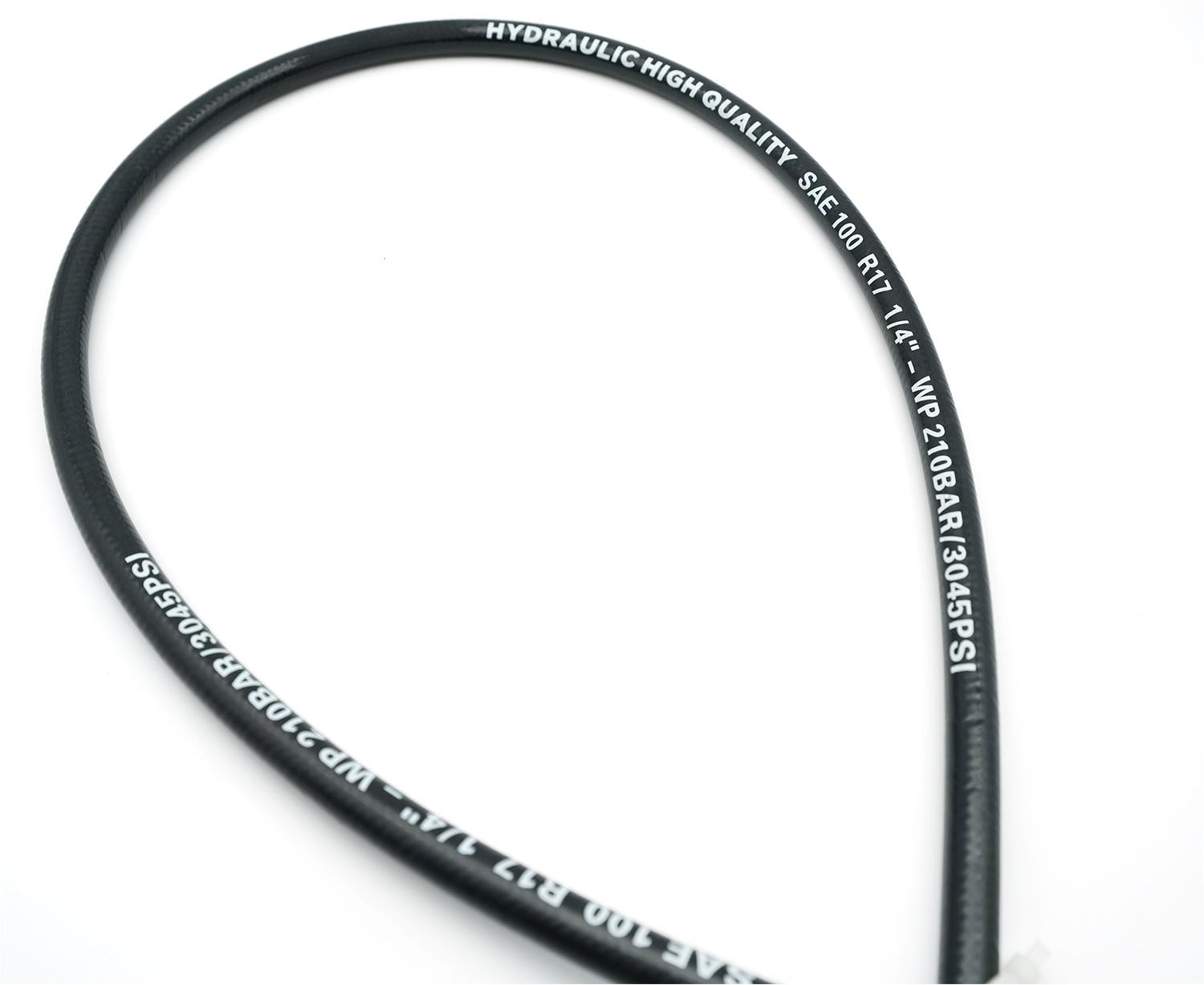
Braided hydraulic hoses are the most common type used in medium-pressure applications. These hoses are made with one or more layers of braided steel wire reinforcement, which provides the necessary strength to withstand pressures up to 3,000 PSI.
Braided hoses are known for their flexibility and ease of use, making them ideal for industrial equipment, such as presses and material handling systems, where flexibility is required for the hose to maneuver through tight spaces. The lightweight design also makes braided hoses easier to install and manage in systems with limited space.
Spiral hydraulic hoses are designed for high-pressure applications, typically ranging from 4,000 PSI to 6,000 PSI. These hoses are reinforced with multiple layers of spiral steel wire, providing greater strength and flexibility compared to braided hoses.
The spiral construction makes these hoses ideal for heavy-duty applications such as mining equipment, oil rigs, and large construction machinery, where equipment is subject to high-pressure forces and frequent movement. Spiral hoses are also highly durable, capable of withstanding harsh environments without failing.
Thermoplastic hydraulic hoses are made from thermoplastic materials like polyurethane or nylon, which offer enhanced flexibility, lightweight construction, and chemical resistance. These hoses are ideal for applications that require resistance to a variety of chemicals and high temperatures, and they typically handle pressures similar to braided hoses.
These hoses are used in industries such as aerospace, chemical processing, and food and beverage, where durability, flexibility, and resistance to harsh substances are essential. Their abrasion-resistant outer covers make them suitable for environments where wear and tear are a concern.
Hydraulic hoses are classified into low, medium, and high pressure. Low-pressure hoses handle pressures below 250 PSI, while high-pressure hoses can withstand 3,000 to 6,000 PSI. The hose's reinforcement, typically spiral steel wire for high pressure and braided steel for medium pressure, determines its pressure resistance.
Flexibility ensures hydraulic hoses bend without kinking or breaking, crucial for safety and system functionality. Hoses with higher flexibility allow easier installation, better performance, and reduced wear, making them ideal for dynamic machinery and easier maintenance.
Durability is key for hydraulic hoses, with resistance to abrasion, chemicals, and temperature extremes. Hoses with enhanced covers, such as UHMWPE, provide additional abrasion resistance, extending service life and ensuring reliable performance in tough environments.
When selecting a hydraulic hose, it’s important to consider factors such as size, pressure, temperature, and application. The hose must be able to withstand the maximum pressure of the hydraulic system, as well as any extreme temperatures that may be encountered. The size of the hose, particularly the inner diameter, should match the flow rate requirements of the system.
Additionally, the hose’s construction material should be selected based on the types of fluids that will be transported. For instance, Nitrile rubber hoses are suitable for petroleum-based fluids, while Teflon hoses are ideal for chemical processing applications.
Hydraulic hoses are governed by various industry standards to ensure safety and performance. In North America, the SAE J517 standard defines the construction and performance requirements for hydraulic hoses. In Europe and internationally, the ISO 9001 and EN 853 standards are commonly followed.
These standards regulate hose construction, pressure ratings, and other performance factors, helping manufacturers design reliable and safe hoses that meet the needs of hydraulic systems across different industries.
The material of the hose plays a significant role in determining its performance and lifespan. Common materials include synthetic rubber, thermoplastic, and Teflon. The choice of material depends on the specific needs of the application, including chemical compatibility, temperature resistance, and pressure handling capacity.
Hydraulic rubber hoses are extensively used in construction equipment, such as excavators, bulldozers, and cranes. These hoses are responsible for transmitting hydraulic fluid to power systems that move heavy machinery. They are particularly valuable in applications where equipment needs to move in tight spaces, as their flexibility allows them to bend without breaking.
Agricultural machinery, such as tractors, harvesters, and plows, relies on hydraulic systems for efficient operation. Hydraulic hoses in these applications need to withstand varying pressures and handle high-temperature fluids, ensuring reliable and safe performance in the field.
Aerospace applications demand hydraulic hoses that can withstand extreme conditions, including high pressures, temperature fluctuations, and chemical exposure. Hydraulic hoses are used in systems such as aircraft landing gear, flight control systems, and hydraulic actuators.
Hydraulic rubber hoses are essential for the smooth and efficient operation of hydraulic systems. By ensuring the seamless transmission of fluid, they help maintain consistent energy transfer, preventing energy losses that could affect overall system performance. Their ability to handle high-pressure environments and maintain flexibility contributes to the optimal functioning of machinery, making hydraulic hoses vital for maximizing productivity and minimizing energy inefficiencies in various industrial applications.
Although hydraulic hoses require an initial investment, their long-term benefits far outweigh the upfront cost. High-quality hoses are built to withstand the pressures and harsh conditions of hydraulic systems, which reduces the frequency of failures and replacements. By ensuring reliable performance over time, they help lower maintenance costs and improve system uptime. This makes them a cost-effective solution for industries looking to maintain efficiency while controlling operational expenses.
Hydraulic hoses with extended service life and enhanced durability reduce operational downtime significantly. By using hoses that are resistant to wear, high pressure, and extreme temperatures, businesses experience fewer failures and repairs, allowing equipment to operate continuously. This leads to higher productivity and fewer interruptions in industrial and construction processes. Reduced downtime also minimizes the need for costly emergency repairs, improving overall operational efficiency and profitability.
Hydraulic rubber hoses are essential for efficient and safe hydraulic systems. They transmit energy across machinery, ensuring smooth operations. Understanding hose types, features, and applications helps businesses choose the best hoses. Choosing the right hydraulic hose is crucial for optimal system performance. At Qingdao Grantseed Rubber Co., Ltd., we provide high-quality hydraulic hoses designed for long-term reliability and cost-effective solutions.
A: A hydraulic rubber hose is a flexible tube used to transmit hydraulic fluid between components in a hydraulic system. It consists of an inner tube, reinforcement layer, and outer cover to withstand high pressure and harsh conditions.
A: Hydraulic hoses transmit pressurized fluid from pumps to actuators, enabling machinery to perform tasks like lifting or pressing. Their flexibility and durability ensure smooth and continuous operation.
A: The main types of hydraulic hoses are braided, spiral, and thermoplastic. Each type is designed for specific pressure ranges and environmental conditions, such as high pressure or chemical resistance.
A: Hydraulic hoses ensure the smooth transmission of fluid, minimizing energy loss and maintaining consistent power transfer, which boosts the overall performance and efficiency of hydraulic systems.
A: Choose a hydraulic hose based on factors like pressure rating, temperature, material compatibility, and flexibility requirements. Ensure it meets industry standards for optimal performance.
A: The cost of hydraulic hoses varies depending on material, size, and pressure rating. While high-quality hoses may have a higher upfront cost, they are more durable and cost-effective in the long term.


