Views: 0 Author: Site Editor Publish Time: 2026-06-29 Origin: Site
When preparing to clean your driveway, wash your vehicle, or restore the look of your outdoor patio, selecting the correct equipment is absolutely essential for achieving optimal results. Among the most critical components of this setup is the water supply line, which is why understanding what size garden hose for a pressure washer you need is a fundamental step for any homeowner or professional landscaper. A garden hose is not just a simple tube; it is the vital conduit that delivers the necessary volume of water to your pressure washer's pump. If this supply is restricted by an improperly sized hose, the pump can suffer from cavitation, leading to poor performance and potentially permanent mechanical damage. Conversely, using a hose that is too large or cumbersome can make your cleaning tasks unnecessarily difficult and physically exhausting. By carefully evaluating the diameter, length, and material of your water supply line, you can ensure that your pressure washer operates at peak efficiency, delivering the high-pressure spray required to blast away dirt, grime, and mildew from various surfaces around your property.
TL;DR: The ideal garden hose size for most standard pressure washers is 5/8-inch in inner diameter, which provides an optimal balance of water flow and maneuverability. Hoses should ideally be kept under 50 feet in length to prevent pressure drops, and they must be constructed from durable materials capable of withstanding outdoor conditions and continuous water flow.
Selecting the right diameter and material for your water supply line ensures your pressure washer receives adequate flow without damaging the pump.
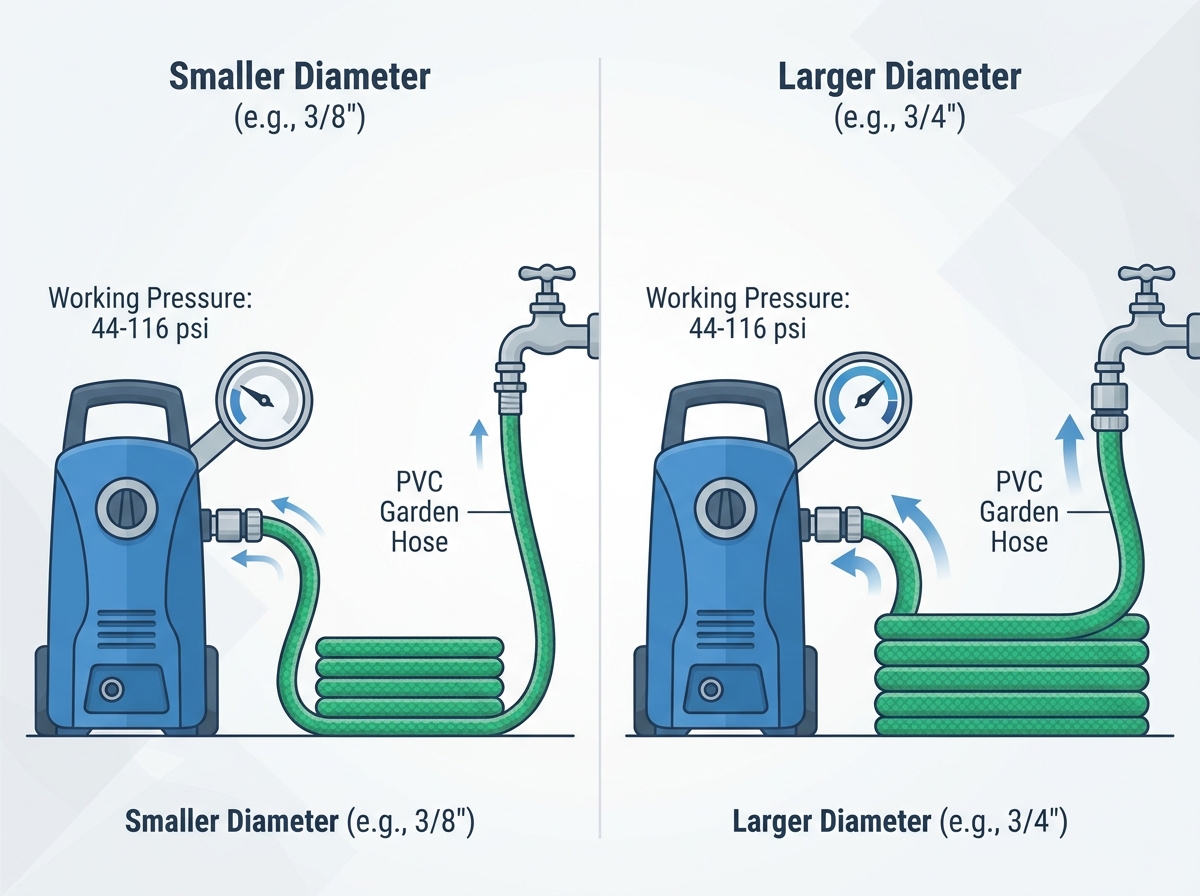
The right garden hose size for a pressure washer is defined as an inner diameter measurement—typically 5/8-inch or 3/4-inch—that guarantees a sufficient gallons-per-minute (GPM) water flow to prevent the pressure washer pump from starving. Understanding this definition is the first step in assembling a reliable and effective exterior cleaning system. The inner diameter (ID) of the hose dictates the volume of water that can travel from your spigot to the machine over a given period. Most residential water supplies provide a flow rate of around 4 to 8 GPM, and a standard 5/8-inch hose is perfectly capable of carrying this volume over moderate distances without significant friction loss. When you connect a pressure washer to your water supply, the machine's pump relies on a continuous, uninterrupted flow of water. If the hose is too narrow, such as a 3/8-inch or 1/2-inch hose used over a long distance, the friction inside the hose restricts the water flow, potentially delivering less water than the pump is trying to push out. This discrepancy causes cavitation, a phenomenon where tiny vacuum bubbles form and collapse inside the pump, causing pitting and severe mechanical wear over time.
Beyond just the diameter, the overall size of the hose also encompasses its length. The longer the hose, the more friction the water encounters as it travels from the source to the pressure washer. This friction results in a drop in water pressure and flow rate by the time the water reaches the machine. Therefore, while a 5/8-inch hose might be perfectly adequate at 25 or 50 feet, extending it to 100 feet or more might require stepping up to a 3/4-inch diameter to compensate for the friction loss. It is generally recommended to use the shortest hose possible that still allows you to reach your work area comfortably. This minimizes pressure drop and ensures that your pressure washer receives the maximum possible flow from your spigot. Furthermore, the physical size and weight of the hose play a crucial role in user fatigue. A massive, heavy-duty 3/4-inch rubber hose might provide excellent water flow, but dragging it across a large yard can be exhausting. This is where modern materials and thoughtful engineering come into play, offering a balance between flow capacity, durability, and ease of use.
The inner diameter is the most critical dimension when discussing what size garden hose for a pressure washer is appropriate. The mathematical relationship between the diameter of a pipe and the volume of fluid it can carry is not linear; it is exponential. This means that a seemingly small increase in diameter, such as moving from 1/2-inch to 5/8-inch, results in a massive increase in the cross-sectional area of the hose, thereby allowing a significantly larger volume of water to flow through it at the same pressure. For pressure washers, which typically require between 2.0 and 4.0 GPM for residential models and up to 8.0 GPM for commercial units, ensuring this unrestricted flow is paramount. A 5/8-inch hose is the industry standard because it easily accommodates the GPM requirements of almost all consumer and prosumer pressure washers while remaining relatively lightweight and flexible. If you are operating a heavy-duty commercial pressure washer that demands exceptionally high flow rates, upgrading to a 3/4-inch hose is often necessary to prevent pump starvation, especially if you are working on a site with lower-than-average municipal water pressure.
Matching the flow rate of your water supply to the requirements of your pressure washer is not merely a suggestion; it is a strict mechanical requirement for the safe and effective operation of the equipment. When you pull the trigger on your pressure washer's spray gun, the pump immediately begins drawing water from the inlet and forcing it through a tiny nozzle at high velocity. If the garden hose supplying the pump cannot deliver water as fast as the pump is trying to expel it, a vacuum is created on the inlet side of the pump. This vacuum causes the water to boil at ambient temperatures, creating microscopic vapor bubbles. When these bubbles pass into the high-pressure side of the pump, they collapse with incredible force, a process known as cavitation. Over time, cavitation will literally tear chunks of metal out of the pump's internal components, leading to a catastrophic and expensive failure. Therefore, ensuring your hose is adequately sized to provide a surplus of water to the pump is the best way to protect your investment and extend the lifespan of your pressure washer.
Furthermore, the performance of the pressure washer itself is directly tied to the water supply. A pressure washer is rated by two primary metrics: Pounds per Square Inch (PSI) and Gallons Per Minute (GPM). While PSI determines the stripping power of the water stream, GPM determines the rinsing power—how quickly you can wash away the debris you have just loosened. If your hose is too small and restricts the water flow, your pressure washer will not be able to achieve its rated GPM. This means that even if the machine is producing high pressure, you will spend significantly more time trying to rinse away dirt because there simply isn't enough water volume carrying it away. This inefficiency not only wastes your time but also forces the pressure washer to run longer than necessary, increasing wear and tear on the engine or electric motor. By selecting the correct hose size, you ensure that the machine operates exactly as the manufacturer intended, providing the optimal balance of pressure and flow for efficient cleaning.
While diameter is crucial, the length of the hose is equally important when considering the overall size requirements for your setup. Water flowing through a hose experiences friction against the inner walls of the tube. The longer the distance the water has to travel, the more friction it encounters, which results in a measurable drop in both pressure and flow rate by the time it reaches the end of the hose. If you are using a 50-foot hose, the pressure drop might be negligible. However, if you string together multiple hoses to reach a distance of 150 or 200 feet, the pressure drop can be substantial enough to starve the pressure washer pump, even if you are using a standard 5/8-inch diameter. To mitigate this issue, it is always best to move the pressure washer closer to the work area and use a longer high-pressure hose to reach the specific cleaning surface, rather than using an excessively long supply hose. If you absolutely must use a long supply hose, increasing the inner diameter to 3/4-inch can help offset the friction loss and ensure adequate flow reaches the machine.
To fully appreciate the importance of selecting the right hose size, it is helpful to understand the basic mechanics of how a garden hose interacts with a pressure washer. The system begins at the water spigot, which is connected to your home's municipal water supply or a private well. The static pressure of this supply typically ranges from 40 to 60 PSI. When you open the valve, water flows into the hose, propelled by this static pressure. The hose acts as a flexible conduit, guiding the water to the inlet of the pressure washer. Inside the pressure washer, a pump—driven by either an electric motor or a gasoline engine—takes this incoming water and accelerates it. The pump features pistons or plungers that draw water in through an intake valve and force it out through a discharge valve. This mechanical action dramatically increases the pressure of the water, often raising it from the initial 40-60 PSI up to anywhere between 1,500 and 4,000 PSI, depending on the machine's specifications.
The pressurized water then travels through a specialized high-pressure hose to the spray gun and wand. At the end of the wand is a nozzle with a very small orifice. Forcing the high-volume, high-pressure water through this tiny opening is what creates the powerful, concentrated jet of water used for cleaning. Throughout this entire process, the garden hose must maintain a steady, uninterrupted supply of water to the pump's inlet. If the hose kinks, collapses, or is simply too small to carry the required volume, the pump will immediately sense the restriction. Many modern pressure washers are equipped with thermal relief valves or unloader valves that help protect the pump in the event of a flow restriction, but these are safety mechanisms, not operational solutions. The fundamental requirement remains: the hose must be capable of delivering more water than the pump is designed to output, ensuring a continuous, positive pressure at the pump inlet at all times.
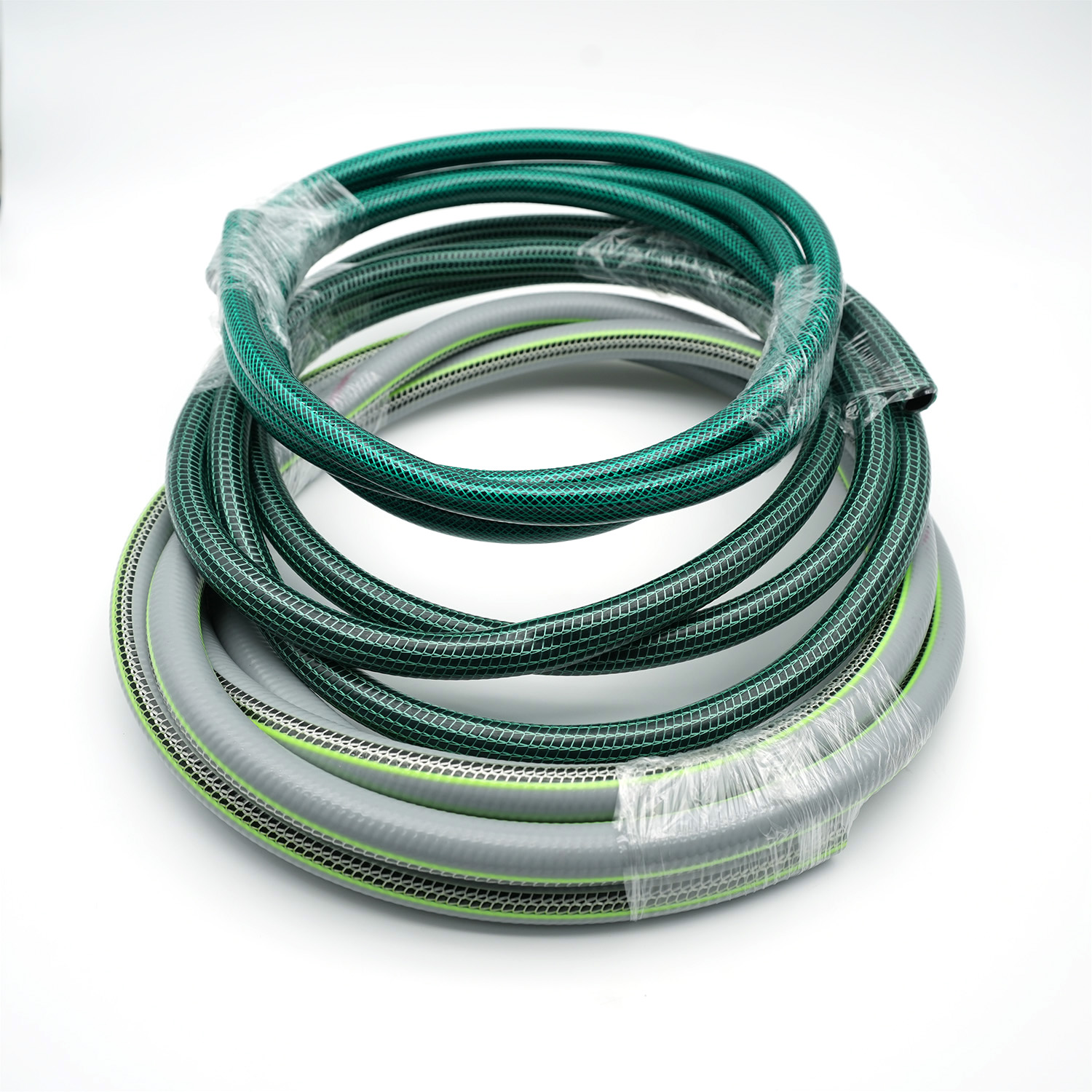
The mechanics of water delivery are heavily influenced by the materials used to construct the hose. A hose must be flexible enough to maneuver around obstacles in a yard, yet rigid enough to resist kinking and collapsing under the negative pressure sometimes created by the pressure washer pump. Traditional rubber hoses are incredibly durable and resist kinking well, but they are notoriously heavy and can leave black scuff marks on surfaces. Vinyl hoses are lightweight and inexpensive, but they are prone to kinking, cracking in cold weather, and degrading under UV exposure. Modern solutions often utilize advanced polymers and composite materials to offer the best of both worlds. For instance, a PVC Garden Hose provides an excellent balance of lightweight flexibility and robust durability, making it an ideal choice for supplying water to pressure washing equipment without the excessive weight of traditional rubber.
Selecting the perfect garden hose for your pressure washer involves a systematic evaluation of your specific needs, your equipment, and your typical working environment. The first practical step is to check the owner's manual of your pressure washer. The manufacturer will almost always specify the minimum required GPM flow rate and often recommend a minimum hose diameter and maximum hose length. Ignoring these specifications voids warranties and risks damaging the machine. Once you know the minimum requirements, you should test the flow rate of your home's exterior spigot. You can do this easily by timing how long it takes to fill a 5-gallon bucket. If it takes one minute to fill the bucket, your flow rate is 5 GPM. If your pressure washer requires 2.5 GPM, your supply is more than adequate. However, if your supply is only 3 GPM and your machine requires 4 GPM, you will need to find an alternative water source, as no hose size can magically create more water than the spigot provides.
After confirming your supply flow rate, consider the physical logistics of your cleaning tasks. Measure the distance from your water source to the areas you most frequently clean. Remember the rule of thumb: keep the supply hose as short as possible. If you only need 25 feet of hose to reach your driveway, do not buy a 100-foot hose just to have extra length, as the additional 75 feet will only serve to reduce your water pressure and make the hose harder to store. Next, evaluate the environmental conditions the hose will be subjected to. If you frequently wash cars on a hot asphalt driveway, you need a hose with strong anti-UV properties and high abrasion resistance to survive being dragged across the rough surface. Finally, consider the fittings. The connectors at the ends of the hose must be made of high-quality materials, such as solid brass or crush-resistant aluminum, to ensure a leak-free connection to both the spigot and the pressure washer inlet. A leaky connection not only wastes water but can also introduce air into the pump, which is just as damaging as cavitation.
When shopping for a hose, you must carefully read the specifications to ensure it meets the demands of pressure washer duty. Look at the working pressure and bursting pressure ratings. While the supply hose does not handle the extreme high pressure generated by the machine, it must withstand the static pressure of your municipal water supply and the occasional pressure spikes that occur when valves are opened and closed rapidly. Additionally, check the temperature ratings. If you plan to use the hose in early spring or late autumn, it must remain flexible in colder temperatures. A hose with a working temperature range of -10℃(-50℉) to 65℃(+150℉) offers excellent versatility for year-round outdoor maintenance tasks. Pay attention to the inner diameter (ID) and outer diameter (OD) specifications, as well as the overall weight of the roll, to ensure the product is manageable for your physical capabilities and storage constraints.
One of the most frequent mistakes homeowners make when setting up their pressure washer is assuming that any old hose lying around the garage will suffice. Using a cheap, heavily kinked, or patched-up hose is a recipe for frustration and potential equipment damage. Kinks act as severe restrictions in the water line, instantly dropping the flow rate and starving the pump. Even if a kink is straightened out, the structural integrity of the hose wall is often permanently compromised at that spot, making it likely to kink again in the exact same location. Another common error is using expandable or "pocket" hoses for pressure washing. While these hoses are incredibly convenient for light watering tasks due to their lightweight and compact nature, their internal diameter is typically very small, and their flow rates are notoriously low. Furthermore, the internal bladder of an expandable hose can sometimes collapse under the suction of a powerful pressure washer pump, completely cutting off the water supply.
Another significant mistake is neglecting to properly maintain and store the hose after use. Leaving a hose pressurized in the hot sun for days on end will rapidly degrade the materials, causing the hose to swell, weaken, and eventually burst. Failing to drain the hose before winter storage can lead to residual water freezing and expanding inside the tube, causing catastrophic ruptures. Proper storage involves draining the water, coiling the hose neatly to prevent twists and kinks, and storing it in a shaded, temperature-controlled environment. Additionally, many users fail to inspect the rubber washers inside the hose connectors. These small, inexpensive components are critical for maintaining a watertight seal. If they become cracked, hardened, or lost, the connection will leak, reducing the amount of water reaching the pressure washer and creating a messy puddle at the spigot. Regularly inspecting and replacing these washers is a simple maintenance task that prevents significant operational issues.
While a hose used for a pressure washer does not necessarily need to be drinking-water safe, ignoring the quality and safety of the materials can still be a mistake. Hoses made from cheap, toxic materials can leach chemicals into the water, which might not be ideal if you are washing surfaces near sensitive garden plants or vegetable beds. Furthermore, low-quality materials often emit strong, unpleasant chemical odors, especially when heated by the sun. Opting for a hose made from non-toxic, odorless materials ensures a more pleasant user experience and minimizes any potential environmental impact during your outdoor cleaning activities. Quality construction, such as reinforcement with high tensile polyester fibre, is also crucial for preventing the hose from ballooning or bursting under standard municipal water pressure.
Inner Diameter | Typical Flow Rate Capacity | Best Use Case | Pressure Washer Compatibility |
|---|---|---|---|
3/8-inch | Low (1-3 GPM) | Patio watering, small balconies | Not recommended. High risk of pump starvation. |
1/2-inch | Moderate (3-5 GPM) | General lawn watering, short distances | Acceptable for light-duty electric washers under 25 feet. |
5/8-inch | High (5-8 GPM) | Standard residential use, car washing | Ideal for most residential gas and electric pressure washers. |
3/4-inch | Very High (8+ GPM) | Commercial landscaping, long distances | Required for heavy-duty commercial washers or runs over 100 feet. |
A: A 5/8-inch inner diameter hose is the best choice for most residential pressure washers. It provides an optimal balance of high water flow to prevent pump cavitation while remaining lightweight and flexible enough for easy maneuvering around your property.
A: You can use a 1/2-inch hose for small, light-duty electric pressure washers if the hose length is kept under 25 feet. However, for gas-powered models or longer distances, a 1/2-inch hose restricts flow too much and risks damaging the pump.
A: Yes. Longer hoses create more internal friction, which reduces the water flow and pressure reaching the machine. Always use the shortest supply hose possible, ideally under 50 feet, to ensure your pressure washer pump receives adequate water volume.
A: Expandable hoses are generally not recommended for pressure washers. They often have narrow internal diameters that restrict flow, and their flexible inner bladders can collapse under the suction created by the pressure washer pump, cutting off the water supply entirely.
A: A grinding sound often indicates cavitation, which occurs when the pump is starved of water. This is usually caused by a kinked supply hose, a clogged inlet filter, or using a hose with an inner diameter that is too small for the machine's requirements.
In conclusion, determining what size garden hose for a pressure washer is appropriate is a vital step in ensuring the longevity and effectiveness of your cleaning equipment. The water supply line is the lifeblood of the pressure washer pump, and failing to provide adequate flow can lead to severe mechanical damage through cavitation. By selecting a hose with a 5/8-inch inner diameter, keeping the length as short as practically possible, and choosing durable materials that resist kinking and UV degradation, you create a reliable foundation for all your outdoor cleaning tasks. Remember to always check your specific machine's GPM requirements and match them against your home's water output and the flow capacity of your chosen hose. Proper maintenance, including careful storage and regular inspection of fittings, will further guarantee that your setup remains leak-free and highly functional season after season. Taking the time to understand these mechanics and make an informed purchasing decision will ultimately save you time, money, and frustration, allowing you to tackle dirt and grime with maximum efficiency.
The Grandflex PVC Garden Hose offers an exceptional solution for supplying water to pressure washers and handling general landscaping tasks. Manufactured by Grandflex, this hose is constructed with a PVC tube and cover reinforced with high tensile polyester fibre, providing high pressure resistance with a working pressure of 44 to 116 psi and a bursting pressure of 130.5 to 348 psi. It features anti-abrasion and anti-UV properties for excellent outdoor durability, operates safely within a temperature range of -10℃(-50℉) to 65℃(+150℉), and is made from non-toxic, odorless materials. Available in inner diameters from 3/8" to 1" and lengths from 7.5 to 100 meters, it includes a connector and spray gun, and is designed to coil up neatly for space-efficient storage, making it highly suitable for residential yards, car washing, and community maintenance.