Views: 0 Author: Site Editor Publish Time: 2026-01-29 Origin: Site
Industrial operations demand reliable solutions for air and water transfer. Leading options for 2026 include the Textile Reinforced Air Hose from Qingdao Grantseed Rubber Co.,ltd., Sinopulse Air Hose, and FEP Smooth Bore Hose. Selecting a Smooth Cover Air/Water Hose with superior durability, pressure handling, and resistance to abrasion, oils, and weather ensures operational safety and long-term savings.
The table below highlights how environmental factors impact hose performance:
Factor | Impact on Hose Performance |
|---|---|
Temperature Extremes | Material degradation, reduced pressure capacity, potential leaks |
Cold Weather | Reduced flexibility, loose fittings, freezing damage |
Humidity & Moisture | Corrosion, mold growth, electrocution risks |
Sun Exposure & UV | Outer cover deterioration, color fading, reduced lifespan |
Wind & Dust | Abrasion, increased wear, more frequent maintenance |
Choose hoses based on specific application needs to ensure safety and efficiency.
Consider pressure ratings carefully; select hoses rated higher than your equipment's maximum pressure.
Evaluate flexibility and handling; a flexible hose reduces kinking and improves routing in tight spaces.
Prioritize durability and abrasion resistance; a robust outer cover extends hose life and reduces maintenance.
Check temperature ranges; using hoses outside their rated limits can lead to failure.
Regular inspections are crucial; look for signs of wear like cracks or leaks to prevent unexpected failures.
Store hoses properly; indoor storage protects from environmental damage and extends lifespan.
Stay informed about regulatory standards; compliance ensures safety and quality in industrial applications.
Selecting the right Smooth Cover Air/Water Hose requires understanding the strengths of each leading model. The Textile Reinforced Air Hose from Qingdao Grantseed Rubber Co.,ltd. stands out for its robust construction and versatility. Sinopulse Air Hose is recognized for its flexibility and reliability in general industrial environments. FEP Smooth Bore Hose is engineered for high-purity and chemical applications, offering exceptional resistance to aggressive media.
Tip: Always match the hose model to the specific requirements of your operation to maximize safety and efficiency.
The table below summarizes the essential specifications for each top model. This comparison helps identify the best fit for your industrial needs.
Hose Model | Material | Pressure Rating (PSI) | Temperature Range | Surface Finish | Best-Use Scenarios |
|---|---|---|---|---|---|
NBR/SBR, Polyester Reinforced | 150, 300, 400, 600 | -40°C to +70°C | Smooth/Wrapped | Mining, construction, shipbuilding, general industry | |
Sinopulse Air Hose | Synthetic Rubber, Textile Braid | 300, 400 | -20°C to +70°C | Smooth | Workshops, factories, pneumatic tools |
FEP Smooth Bore Hose | FEP, Stainless Steel Reinforced | 200, 300 | -70°C to +204°C | Smooth | Chemical transfer, food, pharmaceuticals |
This table highlights the differences in material composition, pressure ratings, and temperature ranges. The Textile Reinforced Air Hose offers a wide range of pressure options and robust durability, making it suitable for demanding environments. Sinopulse Air Hose provides reliable performance for standard air and water transfer tasks. FEP Smooth Bore Hose excels in applications requiring chemical resistance and high purity.
Matching the correct Smooth Cover Air/Water Hose to the application ensures optimal performance and safety. The following table outlines recommended uses based on manufacturer guidance and industry standards.
Hose Model | Application Area | Key Features |
|---|---|---|
Textile Reinforced Air Hose | Mining, construction, shipbuilding, general industry | High pressure, abrasion and oil resistance |
Sinopulse Air Hose | Workshops, pneumatic tools, factories | Flexible, easy handling, reliable performance |
FEP Smooth Bore Hose | Chemical transfer, food, pharmaceuticals | High purity, chemical resistance, wide temp range |
For heavy-duty industrial tasks, the Textile Reinforced Air Hose delivers outstanding durability and pressure handling. Sinopulse Air Hose is ideal for everyday operations in workshops and factories. FEP Smooth Bore Hose is the preferred choice for chemical processing, food, and pharmaceutical sectors due to its smooth bore and resistance to contamination.
Note: Always consult technical datasheets and manufacturer recommendations before finalizing your Smooth Cover Air/Water Hose selection.
Sinopulse Air Hose is a widely recognized solution for industrial air and water transfer. This hose is engineered for flexibility and reliability, making it a popular choice in workshops, factories, and environments where pneumatic tools are essential. The product features advanced reinforcement and optimized elastomer compounds, which contribute to its high impulse life and consistent performance.
Sinopulse Air Hose stands out due to its precision manufacturing and robust construction. The hose incorporates advanced reinforcement, which enhances its durability under repeated pressure cycles. Optimized elastomer compounds provide resistance to abrasion and environmental wear. The compact design allows for a small bending radius, making it easy to handle in confined spaces.
The following table highlights how Sinopulse Air Hose compares to other leading models:
Feature | Sinopulse Air Hose | Other Leading Models |
|---|---|---|
High Impulse Life | Yes | Varies |
Advanced Reinforcement | Yes | Limited |
Optimized Elastomer Compounds | Yes | Varies |
Precision Manufacturing | Yes | Varies |
Note: The combination of high impulse life and advanced reinforcement ensures that Sinopulse Air Hose performs reliably in demanding industrial settings.
Industry reviews frequently mention the following strengths and weaknesses:
Pros | Cons |
|---|---|
Qualified products to help save money and time | Limited information on specific applications and compatibility |
High pressure resistance in certain models like SAE 100R16 | No detailed warranty or after-sales service information provided |
Compact construction with small bending radius | No comparison with other similar products in the market |
Impulse tested according to SAE J517 Standard |
Sinopulse Air Hose offers significant advantages in terms of pressure resistance and handling. However, users may find limited details regarding application compatibility and after-sales support.
Sinopulse Air Hose is best suited for:
Workshops and automotive service centers
Factories with pneumatic tool requirements
General air and water transfer in light to medium-duty industrial environments
The hose’s flexibility and impulse-tested durability make it a reliable choice for daily operations where a Smooth Cover Air/Water Hose is needed.
FEP Smooth Bore Hose is designed for applications that demand high purity and chemical resistance. This hose features a smooth-bore design, which allows for easy cleaning and maintenance. It is constructed from PTFE, a material known for its resistance to a wide range of chemicals and extreme temperatures.
FEP Smooth Bore Hose delivers exceptional performance in environments where contamination must be minimized. The hose is FDA compliant, making it suitable for food, beverage, and pharmaceutical industries. Its non-stick, low-porosity tube ensures self-cleaning properties and reduces the risk of residue buildup.
Key technical specifications include:
Specification | Description |
|---|---|
Material | Constructed from PTFE, ensuring resistance to a wide range of chemicals. |
Design | Smooth-bore design for easy cleaning and maintenance. |
Purity | Suitable for high purity applications, FDA compliant. |
Pressure and Temperature | Capable of handling extreme pressure and temperature conditions. |
Corrosion Resistance | Zero-corrosion rate, leading to lower life cycle costs. |
Cleanability | Non-stick, low porosity tube that is self-cleaning. |
Applications | Used in pharmaceuticals, food & beverage, and fluid transfer of corrosive chemicals. |
Tip: The smooth-bore design and chemical resistance make this hose ideal for sensitive and high-purity operations.
The following table summarizes the reported strengths and weaknesses of FEP Smooth Bore Hose in demanding environments:
Strengths | Weaknesses |
|---|---|
Pressure Tolerant | Variable composition affecting consistency |
Corrosion Resistant | Lower performance compared to engineered fillers |
Durable | Limitations in chemical and thermal resistance for certain filler types |
Exceptional thermal stability | |
Near-universal chemical resistance | |
Superior electrical insulation | |
Enhanced mechanical strength |
FEP Smooth Bore Hose excels in pressure tolerance, corrosion resistance, and thermal stability. Some users note variability in composition and performance when compared to hoses with engineered fillers.
FEP Smooth Bore Hose is recommended for:
Chemical processing and transfer
Food and beverage production lines
Pharmaceutical manufacturing
Fluid transfer of corrosive or high-purity media
This Smooth Cover Air/Water Hose is a top choice for industries that require strict hygiene standards and resistance to aggressive chemicals.
Polyurethane Air Hose has become a popular choice in industrial environments that require lightweight, flexible, and durable hoses. Manufacturers design these hoses to handle air and water transfer tasks in settings where maneuverability and abrasion resistance are essential. Polyurethane offers a unique balance of strength and flexibility, making it suitable for a wide range of applications, from assembly lines to construction sites.
Polyurethane Air Hoses deliver several advantages over traditional rubber or PVC hoses. Their lightweight construction reduces operator fatigue and allows for easy transport. The smooth outer layer minimizes friction, which helps prevent snags and tangles during use. Polyurethane’s chemical structure provides excellent resistance to oils, solvents, and many industrial chemicals, ensuring reliable performance in demanding environments.
The following table summarizes the key performance aspects of Polyurethane Air Hose:
Performance Aspect | Description |
|---|---|
Flexibility | Polyurethane hoses exhibit exceptional flexibility, allowing for easy maneuverability in tight spaces. |
Abrasion Resistance | These hoses are highly resistant to abrasion, making them long-lasting and well-suited for rugged industrial environments. |
Chemical Compatibility | Polyurethane hoses are compatible with a wide range of chemicals, oils, and solvents, enhancing their reliability in diverse industrial settings. |
Tip: Polyurethane Air Hoses are ideal for applications where frequent movement and exposure to abrasive surfaces are common.
Industrial users often weigh the advantages and disadvantages of Polyurethane Air Hoses before making a selection. The following table provides a clear comparison:
Advantages | Disadvantages |
|---|---|
Flexible | Not as durable as rubber |
Lightweight | High cost |
Smooth outer layer – ease of transport | Likely to kink |
Polyurethane Air Hoses offer flexibility and ease of handling, which can improve productivity in fast-paced environments. However, they may not match the long-term durability of heavy-duty rubber hoses and can be more susceptible to kinking if not handled properly.
Polyurethane Air Hoses excel in industries where flexibility, lightweight handling, and chemical resistance are priorities. Common applications include:
Automotive assembly and repair shops
Manufacturing facilities with pneumatic tools
Construction sites requiring portable air supply
Painting and finishing operations
Laboratories and cleanrooms where chemical compatibility is critical
These hoses are also a preferred Smooth Cover Air/Water Hose option for environments that demand frequent repositioning and resistance to abrasion.
Selecting the most suitable hose for industrial operations requires careful evaluation of several critical factors. The right choice ensures safety, efficiency, and long-term reliability in demanding environments.
Pressure rating defines the maximum pressure a hose can safely handle. Always select a hose with a pressure rating that exceeds the highest pressure expected in your application. Exceeding the rated pressure can result in hose failure or dangerous ruptures. Industry standards recommend verifying both working and burst pressure ratings before installation.
Flexibility is essential for applications where hoses must bend or move frequently. A flexible hose resists kinking and allows for easier routing in tight spaces. Smooth bore hoses also promote precise flow control and efficient drainability, which is important for many industrial processes. When evaluating flexibility, consider the minimum bend radius and the hose’s ability to return to its original shape after flexing.
Durability ensures the hose withstands daily wear and tear. Abrasion resistance is especially important in environments with frequent contact with rough surfaces or moving equipment. A protective outer cover, often made from synthetic rubber or silicone, shields the hose and nearby equipment from damage. Selecting a hose with a robust cover extends service life and reduces maintenance needs.
Temperature range indicates the extremes a hose can tolerate without degrading. Most industrial hoses operate reliably within a specific temperature window. For example, some hoses are rated for -40°F to +212°F, while specialty hoses can handle even higher temperatures. Using a hose outside its rated range can cause brittleness, cracking, or leaks, leading to premature failure.
Chemical and oil resistance prevents hose deterioration when exposed to various fluids. Not all hoses are compatible with all chemicals, so always check compatibility with the intended media. Hoses designed for chemical transfer often use materials like FEP or PTFE, which offer near-universal resistance. For air and water transfer, ensure the hose resists oils and other contaminants present in the environment.
Choosing the correct hose size and length minimizes waste and ensures efficient material transport. Undersized hoses restrict flow, while oversized hoses can be cumbersome and costly. Measure the required length accurately, considering routing and movement during operation. Proper sizing also reduces pressure drop and energy consumption.
Certifications confirm that a hose meets industry standards for safety and performance. Look for hoses that comply with relevant standards, such as ISO, SAE, or FDA, depending on your application. Certified hoses provide assurance of quality and suitability for specific environments, including food processing or hazardous chemical handling.
Tip: Always consider external factors like UV exposure, abrasion, and potential impact during usage. A protective cover can safeguard both the hose and surrounding equipment.
Selecting a hose without considering the specific requirements of your application can lead to premature wear or rupture. For example, using a general-purpose hose in a chemical environment may result in rapid degradation and safety risks.
Disregarding manufacturer recommendations, such as temperature ratings or compatible fittings, can compromise hose performance. Mixing components from different manufacturers may create weak points and increase the risk of failure.
Failing to inspect and maintain hoses regularly can result in undetected damage. Routine checks for wear, leaks, or cracks help prevent unexpected downtime and extend hose life.
Choosing a hose based solely on price often leads to higher long-term costs. Low-cost hoses may lack the durability, pressure rating, or certifications required for safe operation. Investing in quality hoses reduces replacement frequency and enhances workplace safety.
Note: Improper assembly or mismatched components, exposure to extreme temperatures, and fluid incompatibility are common causes of hose failure. Always ensure compatibility and follow best practices for installation and maintenance.
A thoughtful approach to selecting a Smooth Cover Air/Water Hose will optimize performance and safety across industrial applications.
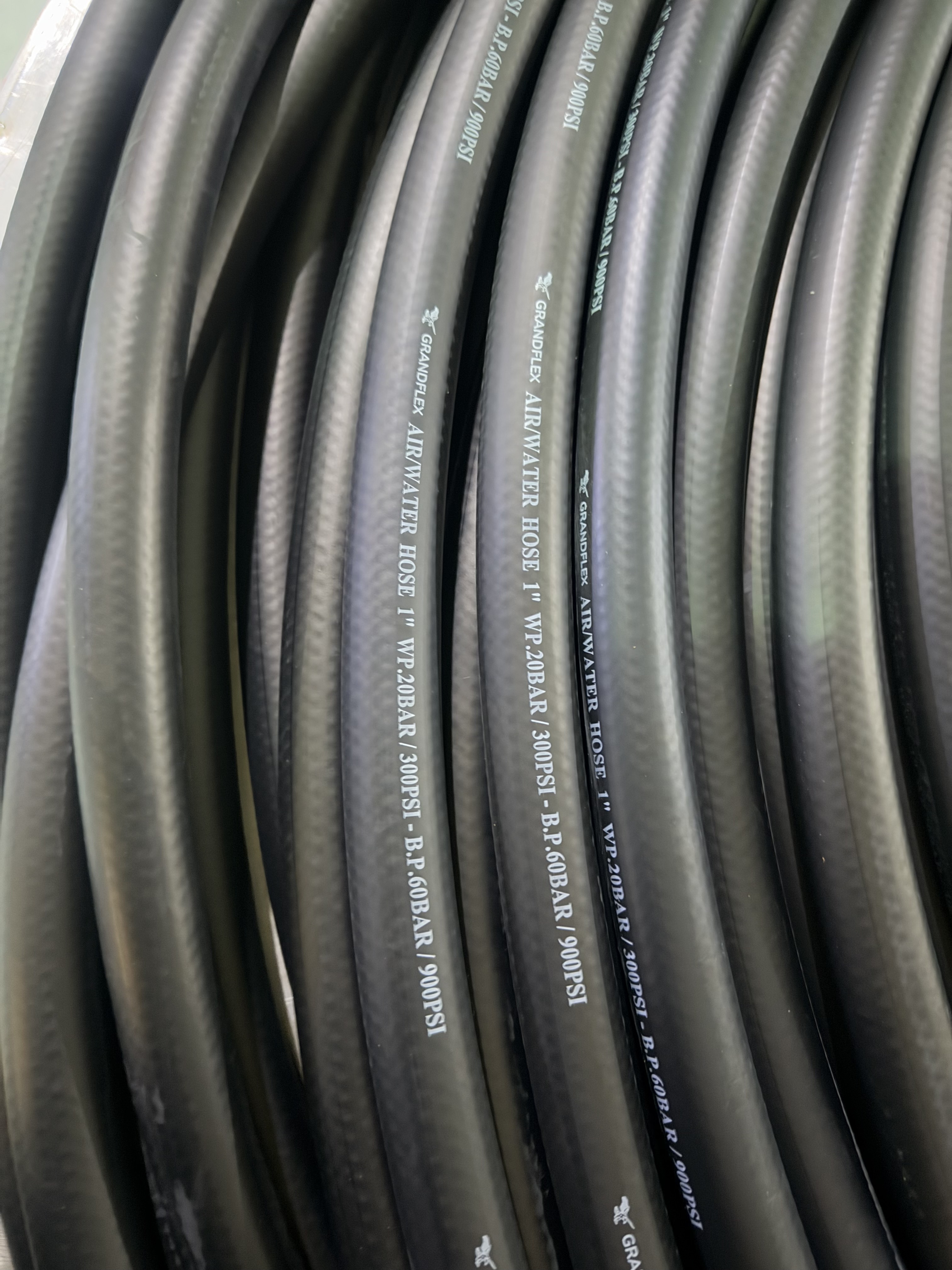
Industrial environments demand hoses that deliver consistent performance under extreme conditions. Operators often select hoses with reinforced covers and high-pressure ratings to ensure reliability. The following table summarizes recommended hose types for heavy-duty applications, highlighting their key features:
Hose Type | Features |
|---|---|
INDUSTRIAL HOSE | Durable cover resists abrasion, cracking, weathering, and ozone. Not recommended for handling fuels. |
HEAVY-DUTY MULTI-PURPOSE | Versatile for high pressure and extreme temperatures (-40°F to +212°F). Ideal for rock-drilling, air-hammer, and water-jetting applications. Constant 1,000 psi working pressure. |
WIRE-BRAIDED AIR HOSE | Heavy-duty air supply for mining, quarries, and construction. Oil mist-resistant tube with high working pressure. |
WATER-SUCTION HOSE | Flexible for suction, discharge, or gravity flow of water. Resistant to water-based AG fertilizers and salt water. |
WATER DISCHARGE HOSE | Medium to heavy-duty discharge of water in various applications. Can be crimped or banded for custom assemblies. |
Selecting a hose from this category ensures durability and safety in demanding industrial settings. Operators benefit from robust construction and resistance to environmental hazards.
Construction and mining sites present unique challenges for hose selection. Stability, longevity, and safety remain top priorities. Industry experts recommend several solutions for these environments:
Pipe floats and hose floats provide buoyancy, reducing the risk of damage and improving transport efficiency.
These products help prevent sagging and entanglement, contributing to a safer working environment.
The Special Mining Outer Dewatering Hose is engineered for the harsh conditions found in mines.
This hose offers technical advantages essential for dewatering applications, including enhanced durability and resistance to abrasion.
Professionals in construction and mining rely on these specialized hoses to maintain operational efficiency and protect equipment from wear.
Manufacturing and processing facilities require hoses that adapt to a wide range of tasks. User feedback highlights the versatility of hoses in these environments. Operators use them to handle dust, fumes, materials, and liquids. These hoses support processes such as kiln operations, vacuum lifting, and abrasive material handling. Their adaptability allows manufacturers to streamline workflows and maintain clean, safe workspaces. Selecting the right hose for manufacturing ensures efficient material transfer and reduces downtime caused by equipment failure.
Tip: Always match hose specifications to the demands of your application. This approach maximizes safety and extends service life.
The food and beverage industry requires hoses that meet strict hygiene and safety standards. Smooth cover air and water hoses play a vital role in maintaining product purity and preventing contamination. Manufacturers design these hoses with materials that resist odor absorption and bacterial growth. The inner tube must remain non-reactive with food products, while the outer cover should withstand frequent cleaning and exposure to sanitizing agents.
Certifications are essential in this sector. Regulatory bodies require hoses to comply with international standards for food contact. The following table highlights a leading hose option and its certifications:
Product Name | Certifications |
|---|---|
PVC Smooth Cover Food Grade Hose | ISO 9001:2015, CRN, PED CE Certified, PESR UKCA Certified |
These certifications demonstrate compliance with quality management systems and food safety regulations. ISO 9001:2015 ensures consistent product quality. CRN and PED CE certifications confirm the hose meets pressure equipment standards in multiple regions. PESR UKCA certification allows use in the United Kingdom under post-Brexit regulations.
Operators in food and beverage processing facilities benefit from hoses that offer flexibility, easy cleaning, and resistance to oils and fats. Smooth cover hoses reduce the risk of residue buildup and simplify sanitation routines. Many facilities choose hoses with transparent or light-colored covers to allow visual inspection for cleanliness.
Tip: Always verify that hoses used in food and beverage applications carry the necessary certifications for your region and process.
Chemical handling environments demand hoses with exceptional chemical resistance and robust construction. The choice of hose depends on the types of chemicals handled, temperature requirements, and pressure conditions. Smooth cover hoses for chemical transfer must resist permeation, degradation, and swelling when exposed to aggressive substances.
The table below summarizes recommended hose types for chemical handling, along with their chemical resistance, temperature range, and typical applications:
Hose Type | Chemical Resistance | Temperature Range | Working Pressure | Applications |
|---|---|---|---|---|
UHMWPE Tubed Hoses | ~98% of chemicals | -40°F to 250°F | Up to 250 PSI | Bulk chemical transport, in-plant transfer |
XLPE Tubed Hoses | ~90% of chemicals | -40°F to 250°F | Up to 200 PSI | Chemical manufacturing, water treatment |
Composite Chemical Hoses | High flexibility | -40°F to 212°F | Up to 250 PSI | Tank truck operations, railcar loading/unloading |
PTFE Hoses | Widest compatibility | -40°F to +302°F | N/A | Pharmaceutical, food grade, aggressive chemicals |
UHMWPE tubed hoses provide broad chemical compatibility and high working pressure, making them suitable for bulk transport and plant operations. XLPE tubed hoses offer reliable performance for most chemical manufacturing and water treatment processes. Composite chemical hoses deliver flexibility and are ideal for mobile applications such as tank trucks. PTFE hoses stand out for their unmatched chemical resistance and ability to handle extreme temperatures, making them the preferred choice for pharmaceutical and high-purity chemical transfer.
Note: Always consult chemical compatibility charts and manufacturer recommendations before selecting a hose for chemical handling. Proper selection ensures safety, reduces downtime, and extends hose service life.
Proper storage extends the lifespan of smooth cover air and water hoses. Indoor storage offers the best protection from environmental hazards. Place hoses on dedicated shelving with good airflow to prevent moisture buildup. Avoid kinking by using wide shelving or racks. Maintain a steady temperature in storage areas. Fluctuating temperatures can cause rubber to expand and contract, which leads to cracking over time.
For outdoor storage, use weather-resistant containers. Keep hoses off the ground to prevent moisture damage. Ensure the storage area has good drainage to avoid standing water. Coil hoses in large loops, ideally three to four feet wide, to prevent kinks and weak spots. Change the coiling direction occasionally. Avoid tight coils, as these can create permanent bends. For hoses used frequently, wall-mounted reels with proper spacing help prevent sagging and make access easier.
Tip: Never store hoses under heavy objects or in direct sunlight for extended periods. UV exposure and pressure can degrade hose materials quickly.
Regular inspections are essential for maintaining hose integrity and ensuring safe operation. Inspection frequency depends on usage. For equipment used daily, perform visual checks before each operation. For less frequent use, inspect hoses weekly or monthly.
During inspections, look for leaks in the hose or fittings. Examine fittings for displacement, slippage, cracks, or corrosion. Check the hose for cracks, unusual hardness, kinks, twists, or flattened areas. Inspect the outer cover for cuts, abrasions, blisters, or loose sections. Always ensure power is off before handling hoses connected to machinery.
Inspect hose system and fittings regularly.
Look for leaks, damaged fittings, and hose cover issues.
Identify kinks, twists, or flattened areas.
Check for softening or cracks in the hose cover.
Note: Early detection of damage prevents unexpected failures and extends service life.
Clean hoses regularly to maintain performance and prevent contamination. Begin by wiping the hose with a dry cloth to remove loose debris. For more thorough cleaning, use a mild detergent solution. Apply the solution with a soft-bristled brush to remove stubborn contaminants. Rinse the hose thoroughly with clean water to eliminate any soap residue. Allow the hose to air dry completely before storage or use.
Avoid using high-pressure cleaning systems, as these can damage the hose structure. Always consult the manufacturer for specific cleaning instructions. Some hoses may require specialized cleaning methods, such as compressed air or approved cleaning fluids.
Dry wipe to remove dust and debris.
Clean with mild detergent and a soft brush.
Rinse thoroughly and air dry.
Avoid high-pressure cleaning methods.
Consult manufacturer guidelines for special requirements.
Proper cleaning not only preserves hose integrity but also ensures safe and efficient operation in demanding environments.
Routine inspection of smooth cover air and water hoses is essential for maintaining operational safety and efficiency. Over time, hoses experience wear due to pressure cycles, environmental exposure, and mechanical stress. Recognizing early warning signs allows operators to prevent unexpected failures and costly downtime.
The following table outlines the most common indicators of hose deterioration and the recommended actions for replacement:
Signs of Wear | Replacement Consideration |
|---|---|
Visible abrasions, cracks, or bulges | Immediate replacement is necessary if visible leaks are present. |
Fluid leakage at hose fittings | Any fluid pooling indicates a broken seal. |
Cracks, splits, cuts, or abrasions | These indicate the hose is compromised. |
Bulging areas or blistering | Indicates internal layer separation. |
Kinks or flattened sections | Restricts fluid flow, requiring replacement. |
Exposed wire braid | Heavy wear can lead to failure. |
Corroded, cracked, or leaking fittings | Immediate removal is necessary. |
Operators should remain vigilant for these warning signs during routine checks. Early detection helps avoid hazardous situations and ensures compliance with workplace safety standards.
Key indicators that a hose requires replacement include:
Cracks, splits, cuts, or abrasions along the hose cover. These often appear as small lines or rough patches and can quickly worsen under pressure.
Bulging areas or blistering, which signal that internal layers have weakened or separated. This condition increases the risk of sudden rupture.
Kinks or flattened sections that restrict fluid flow. Persistent deformation reduces hose performance and may cause pressure buildup.
Exposed wire braid, typically resulting from heavy abrasion or prolonged use. Once reinforcement is visible, the hose has lost its protective barrier.
Fittings that are corroded, cracked, or leaking. Damaged fittings compromise the seal and can lead to fluid loss or contamination.
Other visual cues such as discoloration, soft spots, or changes in hose flexibility also suggest material degradation. Hoses that show any of these symptoms should be removed from service promptly.
Tip: Never attempt to repair a hose with severe wear or structural damage. Replacement is the safest and most cost-effective solution.
Establishing a proactive replacement schedule based on usage frequency, operating environment, and manufacturer recommendations further reduces the risk of failure. High-pressure or high-temperature applications may require more frequent hose changes. Always document inspection findings and replacement dates to support preventive maintenance programs.
By monitoring for these signs and acting quickly, operators can extend equipment life, maintain workplace safety, and minimize unplanned interruptions.
Manufacturers continue to advance hose materials to meet the evolving demands of industrial environments. In 2026, the industry sees a shift toward hybrid compounds that combine the best properties of traditional rubbers and modern polymers. These new materials offer improved abrasion resistance, greater flexibility, and enhanced chemical compatibility. Nitrile blends, thermoplastic elastomers, and reinforced polyolefin compounds now dominate the market. These innovations help hoses maintain performance under extreme temperatures and high-pressure conditions.
Another trend involves the use of advanced reinforcement techniques. High-tensile polyester and aramid fibers provide increased burst strength without sacrificing flexibility. Multi-layered construction methods allow for thinner, lighter hoses that still meet rigorous safety standards. The result is a new generation of hoses that last longer and perform reliably in harsh industrial settings.
Digital technology is transforming the way industries monitor and maintain hose systems. Smart hoses now feature integrated sensors that track key parameters such as pressure, temperature, flow rate, and vibration. These sensors transmit real-time data to centralized monitoring systems, enabling immediate analysis and response.
The following table highlights the most significant smart hose features introduced in 2026:
Feature | Description | Benefit |
|---|---|---|
Pressure Monitoring Sensors | Sensors that monitor the pressure within the hose. | Enhances safety by preventing overpressure situations. |
Damage Detection Capabilities | Systems that detect any damage to the hose in real-time. | Improves operational efficiency by addressing issues promptly. |
IoT Integration | Connectivity that allows for data transmission to a central system. | Facilitates real-time monitoring and analysis for better decision-making. |
Operational Efficiency | Pilot implementations show a 30% improvement in efficiency. | Reduces downtime and enhances overall performance. |
Smart hose assemblies also include features such as proactive issue detection and optimized maintenance scheduling. These capabilities help prevent leaks and costly downtime. Real-time monitoring allows operators to address problems before they escalate, reducing accident risks and improving overall efficiency.
Tip: Smart hose technology not only boosts safety but also streamlines operations, making it a valuable investment for forward-thinking facilities.
Sustainability remains a top priority for hose manufacturers in 2026. Companies now offer eco-friendly hoses made from advanced materials that reduce environmental impact. For example, the Flexaust® Flex-Tube® EF hose uses a clear co-extruded polyolefin elastomer, which serves as a greener alternative to traditional PVC. This material emits fewer volatile organic compounds (VOCs) and has low outgassing properties.
Eco-friendly hoses often feature smooth interiors for efficient airflow and rigid external helixes for added durability. These designs help minimize energy consumption during operation. Many of these products also meet or exceed environmental certifications, supporting green initiatives in industrial settings.
Polyolefin elastomer hoses offer a sustainable alternative to PVC.
Low VOC emissions and reduced outgassing contribute to cleaner air quality.
Smooth interiors improve efficiency and reduce energy use.
Note: Selecting eco-friendly hoses supports both regulatory compliance and corporate sustainability goals.
Regulatory standards for smooth cover air and water hoses continue to evolve. These updates reflect the industry's commitment to safety, environmental responsibility, and product quality. Manufacturers and end-users must stay informed about these changes to ensure compliance and maintain operational integrity.
Several organizations set the benchmarks for hose performance and safety. The most influential include:
ISO (International Organization for Standardization): Sets global standards for hose construction, testing, and labeling.
SAE (Society of Automotive Engineers): Defines technical specifications for hose materials and pressure ratings.
FDA (U.S. Food and Drug Administration): Regulates hoses used in food, beverage, and pharmaceutical applications.
REACH (Registration, Evaluation, Authorization, and Restriction of Chemicals): Governs chemical safety in hose materials within the European Union.
RoHS (Restriction of Hazardous Substances): Limits hazardous substances in hose components, especially for hoses used in sensitive environments.
Note: Compliance with these standards is not optional. Non-compliant hoses can lead to fines, product recalls, or operational shutdowns.
The regulatory landscape for 2026 brings several important updates:
Stricter Material Safety Requirements:
New rules under REACH and RoHS restrict the use of certain plasticizers, heavy metals, and flame retardants. Manufacturers must now provide detailed material disclosures and ensure hoses do not contain banned substances.
Enhanced Pressure and Burst Testing:
ISO and SAE have updated test protocols. Hoses must now undergo more rigorous pressure and burst tests. These changes aim to reduce the risk of hose failure in high-pressure environments.
Expanded Certification for Food and Pharma Hoses:
The FDA and EU authorities have introduced new hygiene standards. Hoses used in food, beverage, and pharmaceutical sectors must now meet stricter cleanliness and traceability requirements.
Mandatory Environmental Impact Reporting:
Many regions now require manufacturers to report the environmental impact of hose production. This includes energy use, emissions, and end-of-life recyclability.
Standard/Regulation | Focus Area | 2026 Update Highlights |
|---|---|---|
ISO 2398 | Industrial hose safety | Enhanced burst/pressure test requirements |
SAE J517 | Hydraulic hose specs | Updated labeling and traceability protocols |
FDA 21 CFR 177 | Food contact materials | Stricter hygiene and documentation standards |
REACH/RoHS | Chemical safety | New substance restrictions and reporting rules |
Buyers must verify that hoses carry up-to-date certifications and documentation. Always request compliance certificates from suppliers. Review technical datasheets for evidence of recent testing and regulatory adherence.
Tip: Regulatory compliance not only ensures legal operation but also protects workers and the environment. Stay proactive by monitoring updates from relevant authorities.
Manufacturers and users who prioritize regulatory compliance will reduce risk, avoid costly disruptions, and build trust with clients and partners.
Selecting the right Smooth Cover Air/Water Hose ensures safety and efficiency in every industrial setting. The Textile Reinforced Air Hose offers robust durability for heavy-duty tasks. Sinopulse Air Hose provides flexibility for workshops and factories. FEP Smooth Bore Hose excels in chemical and food applications. Review technical datasheets and consult suppliers before purchasing. Regular maintenance extends hose life and reduces downtime.
A smooth cover air/water hose features a sleek, non-textured outer layer. This design reduces friction, resists abrasion, and allows for easy cleaning. Industries prefer smooth covers for environments where hoses contact machinery or surfaces frequently.
Check the maximum operating pressure of your equipment. Select a hose with a working pressure rating higher than this value. Always consult manufacturer datasheets for precise specifications.
Yes. Most smooth cover hoses are engineered for both air and water transfer. Always verify compatibility with the intended media and review the hose’s chemical resistance chart.
Routine inspections, proper storage, and regular cleaning extend hose life. Look for signs of wear, such as cracks or bulges. Replace hoses showing damage immediately.
Many smooth cover hoses feature UV- and weather-resistant materials. Check the product’s specifications for outdoor suitability. Store hoses away from direct sunlight when not in use to maximize lifespan.
Measure the required flow rate and pressure drop for your system. Refer to manufacturer charts to select the correct internal diameter. Proper sizing ensures efficient operation and reduces energy loss.
Look for certifications such as ISO, SAE, FDA, or REACH, depending on your application. Certified hoses meet industry standards for safety, quality, and performance.
Note: Never use the same hose for chemicals and food products unless it is certified for both. Cross-contamination risks safety and product quality. Always check the hose’s certifications and intended use.